

Ulcerative Colitis Poop: What Your Stool Reveals About Flares
Your stool patterns tell the story of ulcerative colitis activity in real time. From urgent diarrhea with blood and mucus during flares to normalized bowel movements in remission, understanding these changes empowers you to recognize disease progression, track treatment effectiveness, and regain control over your digestive health. This guide decodes the visual, frequency, and consistency markers that distinguish active inflammation from healing knowledge that transforms bathroom anxiety into actionable health data.
Quick Answer: Typical Ulcerative Colitis Stool Characteristics
Ulcerative colitis poop changes dramatically based on inflammation levels in your colon. The most telling signs include frequency increases, blood presence, and mucus production. These markers help patients and physicians gauge disease activity without invasive procedures.
According to Cghjournal, a stool frequency subscore of 0, indicating normal stool frequency, successfully identifies patients in endoscopic remission with strong predictive value. This connection between bathroom habits and actual disease state makes daily monitoring a powerful clinical tool.
@keyframes hoox-lf-in-hoox-f-71e63148-bfe4-4f21-a401-daea62-top {
from { opacity: 0; transform: translateY(8px); }
to { opacity: 1; transform: translateY(0); }
}
#hoox-f-71e63148-bfe4-4f21-a401-daea62-top {
width: 100%;
max-width: 100%;
box-sizing: border-box;
display: flex;
flex-direction: column;
gap: 20px;
margin: 48px 0;
padding: 32px 28px;
border-radius: 16px;
background: #ffffff;
color: #111111;
font-family: inherit;
border: 1px solid #E2E8F0;
animation: hoox-lf-in-hoox-f-71e63148-bfe4-4f21-a401-daea62-top 0.3s cubic-bezier(0.16, 1, 0.3, 1);
direction: inherit;
}
#hoox-f-71e63148-bfe4-4f21-a401-daea62-top .hoox-form-header {
display: flex;
flex-direction: column;
gap: 8px;
text-align: center;
}
#hoox-f-71e63148-bfe4-4f21-a401-daea62-top .hoox-form-header h2 {
margin: 0;
font-size: 1.5em;
font-weight: 700;
line-height: 1.3;
color: #111111;
border: none;
padding: 0;
}
#hoox-f-71e63148-bfe4-4f21-a401-daea62-top .hoox-form-header p {
margin: 0;
font-size: 1em;
line-height: 1.6;
color: #64748B;
}
#hoox-f-71e63148-bfe4-4f21-a401-daea62-top form[data-hx-form] {
margin: 0;
display: flex;
flex-direction: column;
gap: 14px;
}
#hoox-f-71e63148-bfe4-4f21-a401-daea62-top .hoox-field-wrap {
position: relative;
width: 100%;
box-sizing: border-box;
}
#hoox-f-71e63148-bfe4-4f21-a401-daea62-top .hoox-field-wrap input {
width: 100%;
box-sizing: border-box;
height: 44px;
padding-inline-start: 42px;
padding-inline-end: 14px;
border: 1px solid #E2E8F0;
border-radius: 10px;
font-size: 14px;
color: #111111;
font-family: inherit;
background-color: #F8FAFC;
transition: border-color 0.15s ease, box-shadow 0.15s ease, background-color 0.15s ease;
outline: none;
direction: inherit;
text-align: start;
}
#hoox-f-71e63148-bfe4-4f21-a401-daea62-top .hoox-field-wrap input::placeholder {
color: #94A3B8;
opacity: 1;
}
#hoox-f-71e63148-bfe4-4f21-a401-daea62-top .hoox-field-wrap input:focus {
background-color: #FFFFFF;
border-color: #0077B6,#00B4D8,#90E0EF;
box-shadow: 0 0 0 3px rgba(15, 23, 42, 0.08);
}
#hoox-f-71e63148-bfe4-4f21-a401-daea62-top .hoox-field-icon {
position: absolute;
top: 0;
bottom: 0;
inset-inline-start: 0;
width: 42px;
display: flex;
align-items: center;
justify-content: center;
pointer-events: none;
color: #94A3B8;
transition: color 0.15s ease;
}
#hoox-f-71e63148-bfe4-4f21-a401-daea62-top .hoox-field-wrap:focus-within .hoox-field-icon {
color: #0077B6,#00B4D8,#90E0EF;
}
#hoox-f-71e63148-bfe4-4f21-a401-daea62-top button[type=”submit”] {
width: 100%;
height: 44px;
margin-top: 4px;
border: none;
border-radius: 10px;
background: #0077B6,#00B4D8,#90E0EF;
color: #FFFFFF;
font-size: 14px;
font-weight: 600;
cursor: pointer;
transition: opacity 0.15s ease, transform 0.15s ease, box-shadow 0.15s ease;
box-shadow: 0 1px 2px 0 rgba(0, 0, 0, 0.05);
}
#hoox-f-71e63148-bfe4-4f21-a401-daea62-top button[type=”submit”]:hover {
opacity: 0.94;
}
#hoox-f-71e63148-bfe4-4f21-a401-daea62-top button[type=”submit”]:active {
transform: scale(0.99);
}
#hoox-f-71e63148-bfe4-4f21-a401-daea62-top button[type=”submit”]:disabled {
opacity: 0.6;
cursor: not-allowed;
}
#hoox-f-71e63148-bfe4-4f21-a401-daea62-top .hoox-disclaimer {
margin: 0;
text-align: center;
font-size: 12px;
line-height: 1.5;
color: #94A3B8;
}
#hoox-f-71e63148-bfe4-4f21-a401-daea62-top .hoox-disclaimer a {
color: inherit;
text-decoration: underline;
text-underline-offset: 2px;
}
#hoox-f-71e63148-bfe4-4f21-a401-daea62-top .hoox-disclaimer a:hover {
text-decoration: none;
}
#hoox-f-71e63148-bfe4-4f21-a401-daea62-top .hoox-success {
display: none;
flex-direction: column;
align-items: center;
gap: 14px;
padding: 12px 0;
position: relative;
}
#hoox-f-71e63148-bfe4-4f21-a401-daea62-top .hoox-confetti {
position: absolute;
inset: 0;
overflow: visible;
pointer-events: none;
}
#hoox-f-71e63148-bfe4-4f21-a401-daea62-top .hoox-confetti span {
position: absolute;
top: 50%;
left: 50%;
width: 7px;
height: 11px;
background: var(–hoox-c);
border-radius: 2px;
opacity: 0;
animation: hoox-confetti-burst 0.9s ease-out forwards;
animation-delay: var(–hoox-d, 0s);
}
@keyframes hoox-confetti-burst {
0% { opacity: 1; transform: translate(-50%, -50%) rotate(0deg) scale(1); }
100% { opacity: 0; transform: translate(calc(-50% + var(–hoox-tx)), calc(-50% + var(–hoox-ty))) rotate(var(–hoox-rz)) scale(0.5); }
}
#hoox-f-71e63148-bfe4-4f21-a401-daea62-top .hoox-success-icon {
width: 52px;
height: 52px;
border-radius: 50%;
background: #ECFDF5;
display: flex;
align-items: center;
justify-content: center;
font-size: 26px;
line-height: 1;
animation: hoox-success-pop 0.4s cubic-bezier(0.34, 1.56, 0.64, 1);
}
@keyframes hoox-success-pop {
from { opacity: 0; transform: scale(0.5); }
to { opacity: 1; transform: scale(1); }
}
#hoox-f-71e63148-bfe4-4f21-a401-daea62-top .hoox-success-text {
margin: 0;
text-align: center;
font-size: 15px;
font-weight: 600;
line-height: 1.5;
color: #111111;
}
#hoox-f-71e63148-bfe4-4f21-a401-daea62-top .hoox-disabled-state {
display: none;
flex-direction: column;
align-items: center;
gap: 14px;
padding: 12px 0;
text-align: center;
}
#hoox-f-71e63148-bfe4-4f21-a401-daea62-top .hoox-disabled-icon {
width: 52px;
height: 52px;
border-radius: 50%;
background: #F1F5F9;
display: flex;
align-items: center;
justify-content: center;
color: #64748B;
}
#hoox-f-71e63148-bfe4-4f21-a401-daea62-top .hoox-disabled-text {
margin: 0;
font-size: 14px;
line-height: 1.6;
color: #64748B;
}
#hoox-f-71e63148-bfe4-4f21-a401-daea62-top .hoox-disabled-text a {
color: inherit;
font-weight: 600;
text-decoration: underline;
text-underline-offset: 2px;
}
#hoox-f-71e63148-bfe4-4f21-a401-daea62-top .hoox-disabled-text a:hover {
text-decoration: none;
}
See What This Could Look Like For You
Takes 30 seconds
Thanks! We’ll be in touch.
- Bloody stool: Bright red blood indicates active inflammation in the rectum or lower colon, while darker blood suggests higher colon involvement.
- Mucus presence: White or yellow mucus signals colon lining irritation and excess protective secretion production.
- Increased frequency: More than three bowel movements daily often correlates with disease activity beyond remission levels.
- Urgency: Sudden, intense urges to defecate reflect rectal inflammation and reduced bowel capacity.
- Loose consistency: Diarrhea or soft, unformed stool results from impaired water absorption in the inflamed colon.
- Tenesmus: The sensation of incomplete evacuation even after passing stool indicates rectal inflammation.
- Nocturnal movements: Waking at night to use the bathroom signals moderate to severe disease activity.
Many patients have common questions about UC symptoms that help clarify what constitutes normal versus concerning changes.

Why UC Poop Changes: The Inflammation-Stool Connection
The colon serves one primary function: absorbing water and salt from digested material to form solid waste. When ulcerative colitis inflames the colon lining, this absorption process fails. Water remains in the stool, creating loose movements or diarrhea.
Inflammation also damages the mucus layer that protects colon tissue. Without this barrier, the delicate lining bleeds easily. Blood mixes with stool, appearing as streaks on toilet paper or coloring the water red. The inflamed colon produces excess mucus as an emergency protective response, which patients notice as clear, white, or yellowish discharge.
Transit speed changes too. An inflamed colon contracts more frequently and irregularly, rushing contents toward the rectum before adequate water absorption occurs. This explains the urgent, watery movements that characterize flares.
The inflammation-bleeding connection follows predictable patterns. Superficial inflammation causes minor bleeding visible mainly on tissue. Deeper inflammation, penetrating multiple tissue layers, produces heavier bleeding that significantly colors toilet water. Understanding understanding inflammatory bowel disease mechanisms helps patients interpret what they see.
Active Flare Stool Patterns: The 4 Visual Warning Signs
During active flares, ulcerative colitis poop exhibits distinct characteristics that signal worsening inflammation. Recognizing these patterns early allows for timely intervention before symptoms escalate.
Blood appearance varies by inflammation location. Bright red blood, called hematochezia, indicates bleeding close to the rectum. The blood remains fresh because it travels only a short distance before exiting. Darker blood, appearing maroon or tarry, suggests bleeding higher in the colon where longer transit time allows oxidation.
Mucus texture reveals inflammation intensity. Small amounts of stringy mucus may appear during mild flares. Moderate flares produce visible clumps or gel-like discharge. Severe inflammation generates enough mucus to appear as distinct layers in the stool or pure mucus passages without solid waste.
Undigested food signals transit acceleration. When stool moves through the colon too quickly, digestion cannot complete. Patients may recognize food particles from recent meals, indicating severe transit disruption and poor nutrient absorption.
Pus presence indicates significant tissue damage. Yellow or green-tinged discharge with an unpleasant odor suggests white blood cells are accumulating to fight infection risk at damaged tissue sites. This sign warrants immediate medical evaluation.

According to research published by Springer, patients with increased stool frequency often show persistent symptoms even when endoscopic remission appears achieved, highlighting the complexity of correlating patient-reported outcomes with clinical findings.
| Flare Severity | Stool Frequency | Blood Presence | Consistency | Urgency Level |
|---|---|---|---|---|
| Mild | 3-4 times daily | Minimal, tissue only | Soft but formed | Moderate, manageable |
| Moderate | 5-7 times daily | Visible in bowl | Loose, watery | High, interrupts activities |
| Severe | 8+ times daily | Heavy, colors water | Liquid with debris | Extreme, accidents possible |
Remission Stool: What Normal Looks Like for UC Patients
Remission does not mean perfect digestive health for everyone. Some patients achieve completely normal bowel function, while others maintain mild irregularities without active disease. Understanding remission targets helps patients recognize therapeutic success.
True remission stool characteristics differ markedly from flare patterns. Blood disappears entirely. Mucus production normalizes to imperceptible levels. Frequency stabilizes to your pre-disease baseline, typically one to three movements daily. Consistency firms to formed or slightly soft but not liquid.
Most importantly, urgency diminishes substantially. Patients in remission describe the return of predictable bowel habits the ability to wait after feeling the urge, the confidence to leave home without mapping bathroom locations. This quality-of-life restoration represents the true goal of treatment.
Real patient remission experiences consistently emphasize the relief of regaining bathroom normalcy after months or years of unpredictable urgency.
- No visible blood: Complete absence of red or dark blood in stool, on tissue, or in toilet bowl.
- Minimal to no mucus: No gel-like discharge or stringy material mixed with stool.
- Regular frequency: One to three bowel movements daily, matching pre-disease patterns.
- Formed consistency: Bristol type 3 or 4, indicating adequate water absorption.
- Controllable urgency: Ability to delay defecation when necessary without pain or accidents.
How to Track Stool Patterns for Better Disease Management
Systematic tracking transforms subjective symptoms into objective data. Physicians struggle to help patients who report vague symptoms without specifics. A well-maintained stool log provides precise information that guides treatment adjustments.
Frequency logging captures the number of bowel movements per day, including nighttime episodes. Note the time of each movement to identify patterns related to meals, medications, or stress.
The Bristol Stool Scale offers a standardized consistency rating from type 1 (hard lumps) to type 7 (watery). Most UC patients fluctuate between types 5 and 7 during flares. Documenting daily Bristol type reveals trends that single appointments cannot capture.
Photo documentation provides visual evidence of blood amount, mucus presence, and stool consistency. While this practice initially feels uncomfortable, it creates an undeniable record of symptom progression or improvement.
Associated symptoms warrant tracking alongside stool characteristics. Pain level, urgency intensity, and meal timing contextualize bowel changes.
Many patients combine tracking with herbal support for UC management to monitor how natural interventions affect their patterns over time.
Natural Interventions That Change UC Stool Quality
Conventional medications address inflammation through pharmaceutical pathways, but natural approaches offer complementary benefits. Herbal formulations target inflammatory mechanisms while supporting overall colon health, often producing measurable stool improvements.
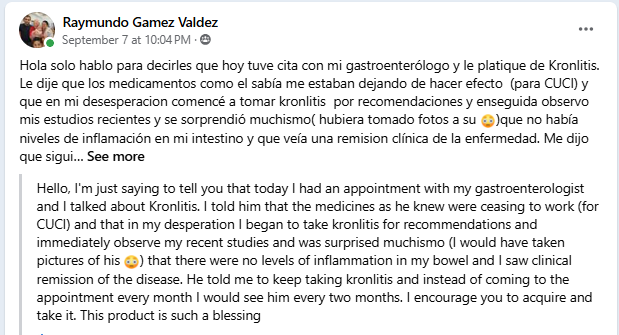
Kronlitis provides a four-herb formulation based on traditional medicine principles refined through modern application. Patients report significant changes in stool quality, often within weeks of consistent use. The formulation works through multiple mechanisms simultaneously.
- Anti-inflammatory action: Herbal compounds reduce pro-inflammatory cytokine production, calming colon tissue and decreasing bleeding.
- Mucus membrane support: Certain herbs promote protective mucus layer restoration, reducing irritation and abnormal discharge.
- Transit normalization: Herbal regulators help restore healthy colon motility, reducing urgency and improving consistency.
- Microbiome balancing: Anti-microbial properties help normalize gut bacteria populations disrupted by chronic inflammation.
- Tissue repair support: Active compounds promote epithelial cell regeneration to heal damaged colon lining.
Patients who explore natural solutions for IBD often report transitions from liquid urgency to formed, predictable movements within weeks.
When Stool Changes Demand Medical Attention
While natural approaches help many patients, certain stool changes signal emergencies requiring immediate medical care. Recognizing these red flags protects patients from dangerous complications.
Severe bleeding that filling the toilet bowl with blood or passing clots indicates potentially dangerous blood loss. This differs from streaking or water discoloration and warrants emergency evaluation.
Fever with bloody stool suggests infection or severe inflammation escalation. The combination indicates your body is fighting a serious threat that may require hospitalization.
Sudden pattern shifts going from controlled symptoms to dramatic worsening overnight often indicate medication failure or complication development.
Signs of dehydration including dizziness, extreme thirst, and reduced urination paired with frequent diarrhea require urgent fluid replacement and medical assessment.
Always review medical disclaimer and guidance when uncertain about symptom severity. Natural approaches complement rather than replace emergency care when situations demand it.
Key Takeaways: Understanding Your UC Bowel Patterns
- Stool patterns reflect colon inflammation status with surprising accuracy, making bathroom monitoring a valuable clinical tool.
- Blood and mucus presence indicate active disease, while their absence suggests remission or reduced inflammation.
- Frequency and urgency normalization represent quality-of-life goals equally important to endoscopic remission.
- Consistent tracking provides objective data that helps physicians optimize treatment and helps patients recognize improvement.
- Natural interventions offer complementary pathways to stool normalization through multi-mechanism anti-inflammatory action.
Understanding your ulcerative colitis poop patterns transforms frustration into actionable insight. Start your journey to remission with knowledge that empowers every bathroom visit.
FAQ: Ulcerative Colitis Stool Questions
What does bright red blood in my stool mean?
Yes, bright red blood indicates active inflammation. The color signifies bleeding in the rectum or lower colon where blood exits before oxidizing. Mild streaking suggests superficial inflammation, while heavier bleeding indicates deeper tissue involvement. Bright red blood always warrants documentation and physician notification, though it rarely constitutes an emergency alone.
Why do I see mucus in my stool?
Yes, mucus signals colon lining irritation. The colon normally produces small amounts of mucus for lubrication, but visible amounts indicate inflammatory excess. White or yellow mucus appears when the colon attempts to protect damaged tissue. Mucus without blood often indicates milder inflammation or early flare onset, making it a useful early warning sign.
How many bowel movements are normal with UC?
Three or fewer daily movements indicates good control. Patients in deep remission typically average one to three movements without urgency or blood. Frequency above three movements daily suggests suboptimal disease control, even without other symptoms. Tracking your personal baseline helps distinguish your normal from early disease activity.
Why does my UC cause such extreme urgency?
Yes, inflammation reduces colon capacity and control. The rectum normally stores stool until convenient elimination. Inflammation makes rectal tissue hypersensitive, triggering evacuation signals with minimal content. The sphincter muscles struggle to hold against these intensified signals. Urgency improves as inflammation subsides and rectal tissue normalizes.
Can stool return to normal with ulcerative colitis?
Yes, many patients achieve completely normal bowel function. Effective treatment that achieves mucosal healing allows the colon to resume normal water absorption and transit regulation. Patients in sustained remission report movements indistinguishable from their pre-disease patterns. The path to normalization varies by individual, with some requiring longer treatment durations.
What does dark or tarry stool indicate?
No, dark stool may indicate higher colon bleeding. Blood from higher in the colon has time to oxidize, turning dark maroon or black. Tarry consistency suggests significant bleeding. However, iron supplements and certain foods also darken stool. Report persistent dark stool to your physician, especially if accompanied by other symptoms.
Should I worry about undigested food in my stool?
Not typically, but it indicates rapid transit. During flares, accelerated colon movement prevents complete digestion. High-fiber foods like corn and vegetables commonly pass partially intact. This sign reflects disease activity rather than a separate problem. Improved stool consistency usually resolves this issue as transit normalizes.
Find comprehensive help when you explore comprehensive UC resources designed for patients navigating inflammatory bowel disease.
@keyframes hoox-lf-in-hoox-f-71e63148-bfe4-4f21-a401-daea62-bottom {
from { opacity: 0; transform: translateY(8px); }
to { opacity: 1; transform: translateY(0); }
}
#hoox-f-71e63148-bfe4-4f21-a401-daea62-bottom {
width: 100%;
max-width: 100%;
box-sizing: border-box;
display: flex;
flex-direction: column;
gap: 20px;
margin: 48px 0;
padding: 32px 28px;
border-radius: 16px;
background: #ffffff;
color: #111111;
font-family: inherit;
border: 1px solid #E2E8F0;
animation: hoox-lf-in-hoox-f-71e63148-bfe4-4f21-a401-daea62-bottom 0.3s cubic-bezier(0.16, 1, 0.3, 1);
direction: inherit;
}
#hoox-f-71e63148-bfe4-4f21-a401-daea62-bottom .hoox-form-header {
display: flex;
flex-direction: column;
gap: 8px;
text-align: center;
}
#hoox-f-71e63148-bfe4-4f21-a401-daea62-bottom .hoox-form-header h2 {
margin: 0;
font-size: 1.5em;
font-weight: 700;
line-height: 1.3;
color: #111111;
border: none;
padding: 0;
}
#hoox-f-71e63148-bfe4-4f21-a401-daea62-bottom .hoox-form-header p {
margin: 0;
font-size: 1em;
line-height: 1.6;
color: #64748B;
}
#hoox-f-71e63148-bfe4-4f21-a401-daea62-bottom form[data-hx-form] {
margin: 0;
display: flex;
flex-direction: column;
gap: 14px;
}
#hoox-f-71e63148-bfe4-4f21-a401-daea62-bottom .hoox-field-wrap {
position: relative;
width: 100%;
box-sizing: border-box;
}
#hoox-f-71e63148-bfe4-4f21-a401-daea62-bottom .hoox-field-wrap input {
width: 100%;
box-sizing: border-box;
height: 44px;
padding-inline-start: 42px;
padding-inline-end: 14px;
border: 1px solid #E2E8F0;
border-radius: 10px;
font-size: 14px;
color: #111111;
font-family: inherit;
background-color: #F8FAFC;
transition: border-color 0.15s ease, box-shadow 0.15s ease, background-color 0.15s ease;
outline: none;
direction: inherit;
text-align: start;
}
#hoox-f-71e63148-bfe4-4f21-a401-daea62-bottom .hoox-field-wrap input::placeholder {
color: #94A3B8;
opacity: 1;
}
#hoox-f-71e63148-bfe4-4f21-a401-daea62-bottom .hoox-field-wrap input:focus {
background-color: #FFFFFF;
border-color: #0077B6,#00B4D8,#90E0EF;
box-shadow: 0 0 0 3px rgba(15, 23, 42, 0.08);
}
#hoox-f-71e63148-bfe4-4f21-a401-daea62-bottom .hoox-field-icon {
position: absolute;
top: 0;
bottom: 0;
inset-inline-start: 0;
width: 42px;
display: flex;
align-items: center;
justify-content: center;
pointer-events: none;
color: #94A3B8;
transition: color 0.15s ease;
}
#hoox-f-71e63148-bfe4-4f21-a401-daea62-bottom .hoox-field-wrap:focus-within .hoox-field-icon {
color: #0077B6,#00B4D8,#90E0EF;
}
#hoox-f-71e63148-bfe4-4f21-a401-daea62-bottom button[type=”submit”] {
width: 100%;
height: 44px;
margin-top: 4px;
border: none;
border-radius: 10px;
background: #0077B6,#00B4D8,#90E0EF;
color: #FFFFFF;
font-size: 14px;
font-weight: 600;
cursor: pointer;
transition: opacity 0.15s ease, transform 0.15s ease, box-shadow 0.15s ease;
box-shadow: 0 1px 2px 0 rgba(0, 0, 0, 0.05);
}
#hoox-f-71e63148-bfe4-4f21-a401-daea62-bottom button[type=”submit”]:hover {
opacity: 0.94;
}
#hoox-f-71e63148-bfe4-4f21-a401-daea62-bottom button[type=”submit”]:active {
transform: scale(0.99);
}
#hoox-f-71e63148-bfe4-4f21-a401-daea62-bottom button[type=”submit”]:disabled {
opacity: 0.6;
cursor: not-allowed;
}
#hoox-f-71e63148-bfe4-4f21-a401-daea62-bottom .hoox-disclaimer {
margin: 0;
text-align: center;
font-size: 12px;
line-height: 1.5;
color: #94A3B8;
}
#hoox-f-71e63148-bfe4-4f21-a401-daea62-bottom .hoox-disclaimer a {
color: inherit;
text-decoration: underline;
text-underline-offset: 2px;
}
#hoox-f-71e63148-bfe4-4f21-a401-daea62-bottom .hoox-disclaimer a:hover {
text-decoration: none;
}
#hoox-f-71e63148-bfe4-4f21-a401-daea62-bottom .hoox-success {
display: none;
flex-direction: column;
align-items: center;
gap: 14px;
padding: 12px 0;
position: relative;
}
#hoox-f-71e63148-bfe4-4f21-a401-daea62-bottom .hoox-confetti {
position: absolute;
inset: 0;
overflow: visible;
pointer-events: none;
}
#hoox-f-71e63148-bfe4-4f21-a401-daea62-bottom .hoox-confetti span {
position: absolute;
top: 50%;
left: 50%;
width: 7px;
height: 11px;
background: var(–hoox-c);
border-radius: 2px;
opacity: 0;
animation: hoox-confetti-burst 0.9s ease-out forwards;
animation-delay: var(–hoox-d, 0s);
}
@keyframes hoox-confetti-burst {
0% { opacity: 1; transform: translate(-50%, -50%) rotate(0deg) scale(1); }
100% { opacity: 0; transform: translate(calc(-50% + var(–hoox-tx)), calc(-50% + var(–hoox-ty))) rotate(var(–hoox-rz)) scale(0.5); }
}
#hoox-f-71e63148-bfe4-4f21-a401-daea62-bottom .hoox-success-icon {
width: 52px;
height: 52px;
border-radius: 50%;
background: #ECFDF5;
display: flex;
align-items: center;
justify-content: center;
font-size: 26px;
line-height: 1;
animation: hoox-success-pop 0.4s cubic-bezier(0.34, 1.56, 0.64, 1);
}
@keyframes hoox-success-pop {
from { opacity: 0; transform: scale(0.5); }
to { opacity: 1; transform: scale(1); }
}
#hoox-f-71e63148-bfe4-4f21-a401-daea62-bottom .hoox-success-text {
margin: 0;
text-align: center;
font-size: 15px;
font-weight: 600;
line-height: 1.5;
color: #111111;
}
#hoox-f-71e63148-bfe4-4f21-a401-daea62-bottom .hoox-disabled-state {
display: none;
flex-direction: column;
align-items: center;
gap: 14px;
padding: 12px 0;
text-align: center;
}
#hoox-f-71e63148-bfe4-4f21-a401-daea62-bottom .hoox-disabled-icon {
width: 52px;
height: 52px;
border-radius: 50%;
background: #F1F5F9;
display: flex;
align-items: center;
justify-content: center;
color: #64748B;
}
#hoox-f-71e63148-bfe4-4f21-a401-daea62-bottom .hoox-disabled-text {
margin: 0;
font-size: 14px;
line-height: 1.6;
color: #64748B;
}
#hoox-f-71e63148-bfe4-4f21-a401-daea62-bottom .hoox-disabled-text a {
color: inherit;
font-weight: 600;
text-decoration: underline;
text-underline-offset: 2px;
}
#hoox-f-71e63148-bfe4-4f21-a401-daea62-bottom .hoox-disabled-text a:hover {
text-decoration: none;
}
See What This Could Look Like For You
Takes 30 seconds
Thanks! We’ll be in touch.