
How to Treat IBD: a Complete Natural & Medical Protocol
Treating inflammatory bowel disease requires a multi-dimensional approach that addresses inflammation at its source while restoring digestive balance. Modern IBD treatment now integrates precision biologics, therapeutic drug monitoring, and evidence-based herbal interventions particularly medicinal herbs that function as natural TNF-α blockers. This comprehensive guide reveals the most effective strategies validated by 2026 clinical data, from initial symptom control to sustained remission, empowering you to reclaim normal life beyond the bathroom.
Quick Answer: The Three-Pillar IBD Treatment Framework
Effective inflammatory bowel disease treatment rests on three interconnected pillars: rapid anti-inflammatory action, sustained mucosal healing, and targeted lifestyle modification. You cannot address one in isolation the most successful protocols tackle all three simultaneously. This integrated approach gives you the best chance at achieving remission and maintaining it long-term.
Modern treatment goals have evolved significantly. According to Yalemedicine, contemporary IBD management focuses on achieving clinical remission and mucosal healing, placing equal emphasis on symptomatic relief and objective markers of reduced inflammation. This dual focus represents a major shift from older approaches that treated symptoms alone.
@keyframes hoox-lf-in-hoox-f-dd206749-c6d7-41d4-9493-3dbb23-top {
from { opacity: 0; transform: translateY(8px); }
to { opacity: 1; transform: translateY(0); }
}
#hoox-f-dd206749-c6d7-41d4-9493-3dbb23-top {
width: 100%;
max-width: 100%;
box-sizing: border-box;
display: flex;
flex-direction: column;
gap: 20px;
margin: 48px 0;
padding: 32px 28px;
border-radius: 16px;
background: #ffffff;
color: #111111;
font-family: inherit;
border: 1px solid #E2E8F0;
animation: hoox-lf-in-hoox-f-dd206749-c6d7-41d4-9493-3dbb23-top 0.3s cubic-bezier(0.16, 1, 0.3, 1);
direction: inherit;
}
#hoox-f-dd206749-c6d7-41d4-9493-3dbb23-top .hoox-form-header {
display: flex;
flex-direction: column;
gap: 8px;
text-align: center;
}
#hoox-f-dd206749-c6d7-41d4-9493-3dbb23-top .hoox-form-header h2 {
margin: 0;
font-size: 1.5em;
font-weight: 700;
line-height: 1.3;
color: #111111;
border: none;
padding: 0;
}
#hoox-f-dd206749-c6d7-41d4-9493-3dbb23-top .hoox-form-header p {
margin: 0;
font-size: 1em;
line-height: 1.6;
color: #64748B;
}
#hoox-f-dd206749-c6d7-41d4-9493-3dbb23-top form[data-hx-form] {
margin: 0;
display: flex;
flex-direction: column;
gap: 14px;
}
#hoox-f-dd206749-c6d7-41d4-9493-3dbb23-top .hoox-field-wrap {
position: relative;
width: 100%;
box-sizing: border-box;
}
#hoox-f-dd206749-c6d7-41d4-9493-3dbb23-top .hoox-field-wrap input {
width: 100%;
box-sizing: border-box;
height: 44px;
padding-inline-start: 42px;
padding-inline-end: 14px;
border: 1px solid #E2E8F0;
border-radius: 10px;
font-size: 14px;
color: #111111;
font-family: inherit;
background-color: #F8FAFC;
transition: border-color 0.15s ease, box-shadow 0.15s ease, background-color 0.15s ease;
outline: none;
direction: inherit;
text-align: start;
}
#hoox-f-dd206749-c6d7-41d4-9493-3dbb23-top .hoox-field-wrap input::placeholder {
color: #94A3B8;
opacity: 1;
}
#hoox-f-dd206749-c6d7-41d4-9493-3dbb23-top .hoox-field-wrap input:focus {
background-color: #FFFFFF;
border-color: #0077B6,#00B4D8,#90E0EF;
box-shadow: 0 0 0 3px rgba(15, 23, 42, 0.08);
}
#hoox-f-dd206749-c6d7-41d4-9493-3dbb23-top .hoox-field-icon {
position: absolute;
top: 0;
bottom: 0;
inset-inline-start: 0;
width: 42px;
display: flex;
align-items: center;
justify-content: center;
pointer-events: none;
color: #94A3B8;
transition: color 0.15s ease;
}
#hoox-f-dd206749-c6d7-41d4-9493-3dbb23-top .hoox-field-wrap:focus-within .hoox-field-icon {
color: #0077B6,#00B4D8,#90E0EF;
}
#hoox-f-dd206749-c6d7-41d4-9493-3dbb23-top button[type=”submit”] {
width: 100%;
height: 44px;
margin-top: 4px;
border: none;
border-radius: 10px;
background: #0077B6,#00B4D8,#90E0EF;
color: #FFFFFF;
font-size: 14px;
font-weight: 600;
cursor: pointer;
transition: opacity 0.15s ease, transform 0.15s ease, box-shadow 0.15s ease;
box-shadow: 0 1px 2px 0 rgba(0, 0, 0, 0.05);
}
#hoox-f-dd206749-c6d7-41d4-9493-3dbb23-top button[type=”submit”]:hover {
opacity: 0.94;
}
#hoox-f-dd206749-c6d7-41d4-9493-3dbb23-top button[type=”submit”]:active {
transform: scale(0.99);
}
#hoox-f-dd206749-c6d7-41d4-9493-3dbb23-top button[type=”submit”]:disabled {
opacity: 0.6;
cursor: not-allowed;
}
#hoox-f-dd206749-c6d7-41d4-9493-3dbb23-top .hoox-disclaimer {
margin: 0;
text-align: center;
font-size: 12px;
line-height: 1.5;
color: #94A3B8;
}
#hoox-f-dd206749-c6d7-41d4-9493-3dbb23-top .hoox-disclaimer a {
color: inherit;
text-decoration: underline;
text-underline-offset: 2px;
}
#hoox-f-dd206749-c6d7-41d4-9493-3dbb23-top .hoox-disclaimer a:hover {
text-decoration: none;
}
#hoox-f-dd206749-c6d7-41d4-9493-3dbb23-top .hoox-success {
display: none;
flex-direction: column;
align-items: center;
gap: 14px;
padding: 12px 0;
position: relative;
}
#hoox-f-dd206749-c6d7-41d4-9493-3dbb23-top .hoox-confetti {
position: absolute;
inset: 0;
overflow: visible;
pointer-events: none;
}
#hoox-f-dd206749-c6d7-41d4-9493-3dbb23-top .hoox-confetti span {
position: absolute;
top: 50%;
left: 50%;
width: 7px;
height: 11px;
background: var(–hoox-c);
border-radius: 2px;
opacity: 0;
animation: hoox-confetti-burst 0.9s ease-out forwards;
animation-delay: var(–hoox-d, 0s);
}
@keyframes hoox-confetti-burst {
0% { opacity: 1; transform: translate(-50%, -50%) rotate(0deg) scale(1); }
100% { opacity: 0; transform: translate(calc(-50% + var(–hoox-tx)), calc(-50% + var(–hoox-ty))) rotate(var(–hoox-rz)) scale(0.5); }
}
#hoox-f-dd206749-c6d7-41d4-9493-3dbb23-top .hoox-success-icon {
width: 52px;
height: 52px;
border-radius: 50%;
background: #ECFDF5;
display: flex;
align-items: center;
justify-content: center;
font-size: 26px;
line-height: 1;
animation: hoox-success-pop 0.4s cubic-bezier(0.34, 1.56, 0.64, 1);
}
@keyframes hoox-success-pop {
from { opacity: 0; transform: scale(0.5); }
to { opacity: 1; transform: scale(1); }
}
#hoox-f-dd206749-c6d7-41d4-9493-3dbb23-top .hoox-success-text {
margin: 0;
text-align: center;
font-size: 15px;
font-weight: 600;
line-height: 1.5;
color: #111111;
}
#hoox-f-dd206749-c6d7-41d4-9493-3dbb23-top .hoox-disabled-state {
display: none;
flex-direction: column;
align-items: center;
gap: 14px;
padding: 12px 0;
text-align: center;
}
#hoox-f-dd206749-c6d7-41d4-9493-3dbb23-top .hoox-disabled-icon {
width: 52px;
height: 52px;
border-radius: 50%;
background: #F1F5F9;
display: flex;
align-items: center;
justify-content: center;
color: #64748B;
}
#hoox-f-dd206749-c6d7-41d4-9493-3dbb23-top .hoox-disabled-text {
margin: 0;
font-size: 14px;
line-height: 1.6;
color: #64748B;
}
#hoox-f-dd206749-c6d7-41d4-9493-3dbb23-top .hoox-disabled-text a {
color: inherit;
font-weight: 600;
text-decoration: underline;
text-underline-offset: 2px;
}
#hoox-f-dd206749-c6d7-41d4-9493-3dbb23-top .hoox-disabled-text a:hover {
text-decoration: none;
}
See What This Could Look Like For You
Takes 30 seconds
Thanks! We’ll be in touch.
The first pillar anti-inflammatory action creates the foundation. Whether you choose conventional biologics or natural TNF-α blocking supplement options, the goal remains identical: rapidly suppressing the inflammatory cascade before it causes further tissue damage. Speed matters here. The longer inflammation persists, the more damage accumulates.
Pillar two focuses on mucosal healing. Once you stabilize acute symptoms, your intestinal lining needs active repair support. This phase determines whether your remission holds or collapses under stress. The third pillar lifestyle modification builds the sustainable framework that keeps you in remission. Dietary choices, stress management, and sleep hygiene all play critical roles.
| Factor | Conventional Biologics | Herbal TNF-α Blockers |
|---|---|---|
| Mechanism | Synthetic antibody inhibition | Plant-based inflammatory pathway modulation |
| Onset Time | 4-8 weeks for full effect | 2-4 weeks initial response |
| Monthly Cost | $3,000-$7,000+ | $150-$300 |
| Side Effect Profile | Infusion reactions, infection risk, injection site pain | Minimal, gentle digestive support |
Understanding Your IBD Inflammation Type Before Treatment
Before selecting any treatment protocol, you must understand exactly where your inflammation lives and how deeply it penetrates. Colon-based Crohn’s disease requires different intervention than ulcerative colitis, even though both fall under the inflammatory bowel disease umbrella. The location dictates your treatment strategy.
Ulcerative colitis affects only the innermost lining of your colon and rectum, presenting as continuous inflammation starting from the rectum and moving upward. Crohn’s disease can affect any part of your digestive tract from mouth to anus, but when it targets the colon specifically, the inflammation penetrates deeper into the bowel wall layers. This anatomical difference matters enormously for treatment selection.
Disease severity also determines intervention intensity. A patient with mild inflammation needs different support than someone experiencing severe bleeding and twenty-plus bathroom visits daily. Matching treatment power to disease severity prevents both under-treatment and unnecessary intervention intensity.
Understanding your specific inflammation pattern allows you to target IBD disease stages and manifestations with precision rather than guesswork. Generic approaches fail because IBD presents differently in each person.
- Low Severity: Occasional loose stools, mild fatigue responds to gentle herbal support and dietary adjustment
- Low-Medium Severity: Daily symptoms affecting routine, 3-5 bathroom visits requires consistent herbal protocol with lifestyle modification
- Medium Severity: Regular pain, 6-10 bathroom visits, work disruption demands aggressive anti-inflammatory intervention
- Medium-High Severity: Bleeding present, 10-15 bathroom visits, significant life restriction intensive multi-modal approach essential
- High Severity: Constant pain, 15+ bathroom visits, bleeding, inability to function immediate intervention critical to prevent hospitalization
How to Stop Acute IBD Flares Within 72 Hours
When bleeding starts and bathroom visits multiply, you need immediate action not theories. An acute IBD flare demands aggressive intervention to break the inflammatory cycle before it intensifies. The following protocol addresses bleeding, pain, and frequency with speed as the primary objective.
Acute flares follow a predictable pattern. Inflammation triggers mucus production, which irritates the bowel lining further, causing more inflammation. Breaking this cycle quickly prevents the cascade from escalating. Each hour matters when you are actively bleeding.
Clinical evidence supports rapid intervention strategies. According to Mdpi, biologic therapies in real-world settings have demonstrated effectiveness in achieving clinical remission when intervention begins early in the flare cycle. The same principle applies to natural interventions early action produces better outcomes.
- Eliminate all potential triggers immediately: Stop dairy, gluten, alcohol, processed foods, and NSAIDs within the first hour of recognizing a flare.
- Begin aggressive hydration with electrolytes: Dehydration worsens symptoms dramatically drink bone broth or electrolyte solutions every hour.
- Start four-herb anti-inflammatory formulation: anti-inflammatory herbal formulations work fastest when taken on an empty stomach for maximum absorption.
- Implement strict dietary rest: Consume only easily digestible foods well-cooked white rice, steamed fish, and peeled potatoes for 72 hours.
- Apply heat therapy for pain relief: Heating pads on the lower abdomen reduce cramping and promote blood flow to healing tissues.
- Track all symptoms hourly: Document bleeding frequency, pain levels, and bathroom visits to identify what helps and what worsens symptoms.
The Four-Herb Protocol: Precision Chinese Medicine for Colon Inflammation
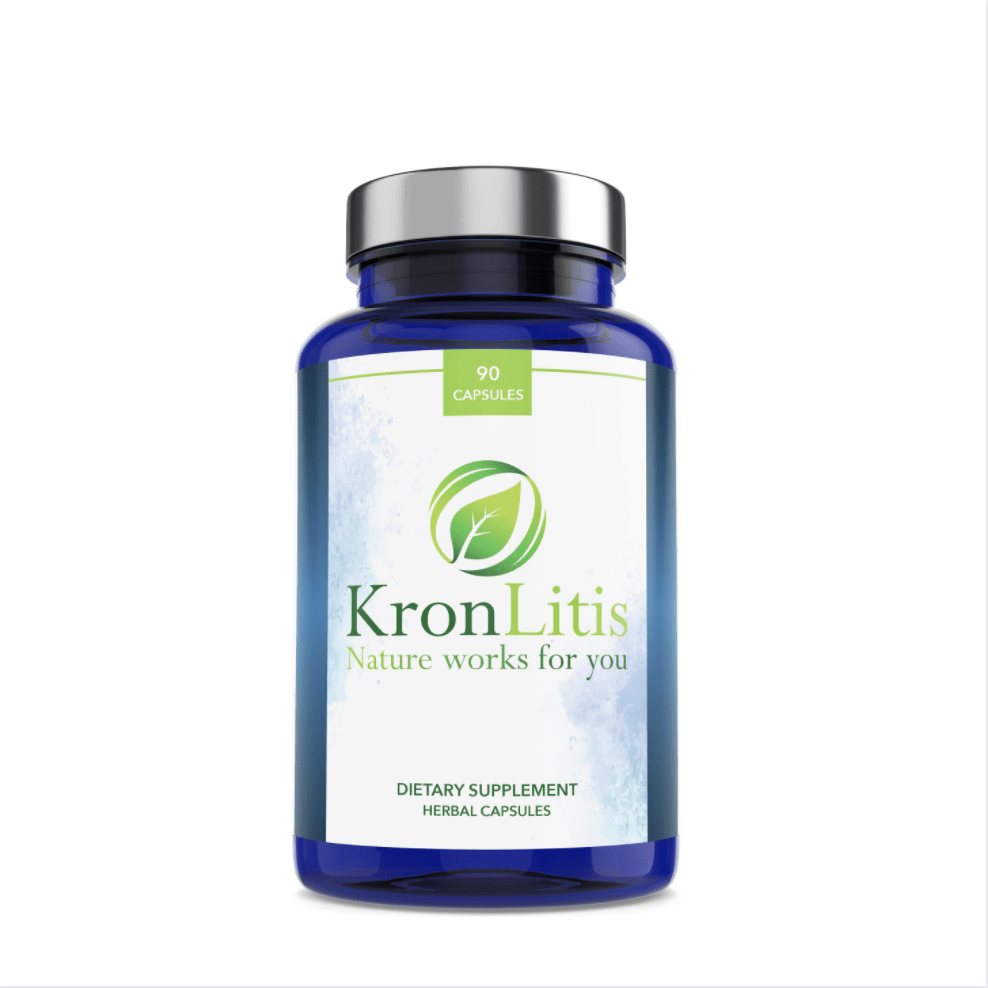
The Kronlitis formulation represents a significant advancement in natural IBD therapy. While many herbal approaches rely on two-herb combinations, this four-herb protocol delivers broader inflammatory pathway coverage with documented results in colon-specific inflammation. The additional herbs translate to faster action and more comprehensive remission support.
Each herb in the formulation targets a specific aspect of the inflammatory cascade. Working synergistically, they address TNF-α production, mucosal repair, immune modulation, and digestive soothing simultaneously. This multi-pathway approach mirrors how conventional biologics work but through plant-based mechanisms your body recognizes and processes naturally.
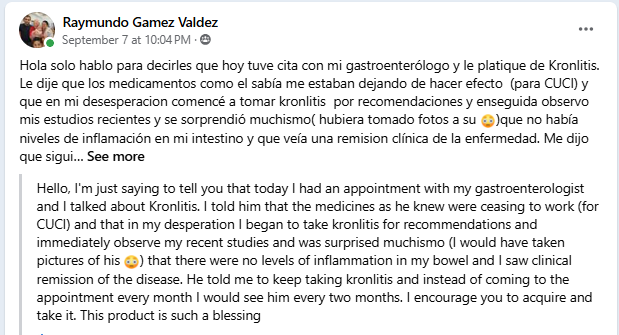
The speed of response distinguishes this approach from simpler formulations. Patients report initial symptom improvement within two weeks, with significant progress by week four. This timeline competes favorably with conventional biologic therapies that often require six to eight weeks for measurable effect. For someone bleeding daily, that time difference matters enormously.

Clinical development prioritized colon-specific inflammation rather than general digestive support. You can read more about the development of our herbal formulation and the specific selection criteria for effective inflammatory bowel disease treatment.
| Factor | Kronlitis Four-Herb Formula | Standard Two-Herb Alternatives |
|---|---|---|
| Herb Count | Four synergistic herbs | Two-herb combinations |
| TNF-α Blocking Potency | Multi-pathway coverage | Limited pathway targeting |
| Remission Speed | 2-4 weeks initial response | 6-8 weeks typical onset |
| Monthly Cost | Significantly lower | Variable, often higher |
Integrating Precision Medicine Monitoring With Natural Therapies
Modern IBD management increasingly incorporates precision medicine principles tailoring treatment to your specific biology rather than using one-size-fits-all protocols. Therapeutic drug monitoring, typically associated with conventional biologics, applies equally well to natural interventions. You need objective data to confirm your protocol works.
The 2026 treatment landscape emphasizes patient-specific factor integration. According to Nih, precision medicine in IBD treatment increasingly integrates therapeutic drug monitoring with multi-omics approaches to match patients with optimal therapies based on their unique biological signatures. This represents the future of personalized digestive inflammation treatment.
Practically, this means tracking measurable markers alongside symptom improvement. Fecal calprotectin levels, inflammatory markers in blood work, and endoscopic findings all provide objective confirmation that your intervention works. You cannot rely on symptoms alone some patients feel better before actual healing occurs, while others heal without dramatic symptom shifts initially.
Natural therapies benefit from the same monitoring intensity as conventional treatments. Regular assessment allows you to adjust dosage timing, identify personal triggers, and optimize your protocol for patient remission outcomes that last. Data-driven treatment produces better results than intuition alone.
Building Your Personalized IBD Remission Maintenance Plan
Achieving remission represents your first victory maintaining it constitutes the real challenge. Sustainable remission requires daily practices that support digestive health while remaining practical enough to follow consistently. An overly restrictive protocol fails because you cannot sustain it long-term. The best plan fits your life, not the reverse.
Morning routines set your digestive tone for the entire day. How you break your overnight fast, your first fluid intake, and your stress levels upon waking all influence digestive function. Creating predictable patterns helps your body maintain stability.
- Hydrate immediately upon waking: Drink 16oz of room-temperature water before anything else to stimulate gentle digestive motility.
- Take herbal protocol consistently: Same time daily, with or without food as directed consistency maximizes therapeutic effect.
- Practice stress reduction before eating: Three minutes of deep breathing shifts your nervous system into parasympathetic mode for better digestion.
- Eat meals at consistent times: Your digestive system thrives on predictability irregular eating patterns trigger symptom flares.
- Walk briefly after main meals: Gentle movement improves digestive transit without the stress of intense exercise.
- Protect sleep hygiene religiously: Sleep is when your gut repairs inadequate sleep directly correlates with symptom worsening.
- Track triggers without obsession: Note what worsens symptoms without letting tracking consume your mental energy or social life.
Restoring normal life requires believing remission is possible. Many IBD patients have experienced so many failed treatments that hope itself feels dangerous. Yet documented start your remission protocol outcomes show that sustained remission happens regularly for patients who find the right intervention match and commit to maintenance practices.
Key Takeaways: Your IBD Treatment Decision Framework
Navigating IBD treatment options requires clear decision criteria rather than emotional reaction. When symptom intensity creates desperation, rational decision-making suffers. This framework provides the structure you need to choose wisely, even when feeling overwhelmed.
- Match intervention intensity to disease severity: Mild inflammation needs gentle support; severe disease demands aggressive multi-pronged approaches.
- Prioritize speed of anti-inflammatory action: Faster initial response prevents accumulating damage and improves long-term outcomes.
- Consider cost sustainability: The best protocol works only if you can afford it long-term factor monthly expense into treatment decisions.
- Monitor objectively, not just symptomatically: Inflammatory markers confirm real healing beyond temporary symptom masking.
- Integrate natural and conventional approaches strategically: Sequential or combination protocols often outperform either approach alone.
- Build maintenance practices before you need them: Establishing healthy patterns during remission prevents scramble during flares.
The treatment landscape for inflammatory bowel disease has never offered more options. From advanced biologics to refined herbal protocols, patients in 2026 can explore integrative IBD solutions that previous generations could not access. The key is systematic evaluation rather than desperate trial-and-error.
Frequently Asked Questions About IBD Treatment
Can natural herbs actually work as well as prescription biologics for IBD?
Yes, for many patients. Multi-herb formulations that function as TNF-α blockers can achieve comparable inflammatory suppression to biologics in mild-to-moderate cases, often with significantly lower side effect burden. Clinical outcomes show particular effectiveness for colon-specific inflammation. While biologics remain essential for severe disease, natural protocols offer a realistic alternative for appropriate candidates, especially considering the cost difference and safety profile.
How quickly can I expect symptom improvement from herbal IBD treatment?
Initial improvement typically appears within 2-4 weeks. This compares favorably to conventional biologics requiring 6-8 weeks for measurable effect. The four-herb approach, with its broader inflammatory pathway coverage, often accelerates this timeline beyond simpler two-herb alternatives. Full remission takes longer typically 8-12 weeks of consistent protocol adherence but meaningful symptom reduction happens relatively quickly for patients who respond.
Is it safe to combine natural herbal protocols with conventional IBD medications?
Generally yes, but consult your physician. Many experienced practitioners successfully integrate herbal support with biologic therapy, using natural interventions to potentially reduce biologic dosage requirements or extend time between infusions. Herbal protocols can also bridge gaps when transitioning between conventional treatments. The key is medical supervision natural does not mean risk-free, and your physician needs complete information about everything you take.
Will I need to stay on herbal treatment forever once I achieve remission?
Most patients benefit from ongoing maintenance protocols. IBD is a chronic condition without permanent cure remission means active management, not treatment elimination. However, many patients successfully reduce dosage frequency during stable remission. Some maintain symptom control through diet and lifestyle alone during extended remission periods, restarting herbal support at the first sign of symptom recurrence. The goal is sustainable management, not indefinite high-dose intervention.
What makes the four-herb formulation more effective than two-herb alternatives?
Broader inflammatory pathway coverage. Each herb targets specific inflammatory mechanisms adding herbs multiplies pathway coverage rather than simply increasing dose of single mechanisms. Four-herb formulas address TNF-α production, mucosal repair, immune modulation, and digestive soothing simultaneously. This comprehensive approach typically produces faster onset and more complete remission in colon-specific inflammation compared to the limited pathway targeting of simpler formulations.
@keyframes hoox-lf-in-hoox-f-dd206749-c6d7-41d4-9493-3dbb23-bottom {
from { opacity: 0; transform: translateY(8px); }
to { opacity: 1; transform: translateY(0); }
}
#hoox-f-dd206749-c6d7-41d4-9493-3dbb23-bottom {
width: 100%;
max-width: 100%;
box-sizing: border-box;
display: flex;
flex-direction: column;
gap: 20px;
margin: 48px 0;
padding: 32px 28px;
border-radius: 16px;
background: #ffffff;
color: #111111;
font-family: inherit;
border: 1px solid #E2E8F0;
animation: hoox-lf-in-hoox-f-dd206749-c6d7-41d4-9493-3dbb23-bottom 0.3s cubic-bezier(0.16, 1, 0.3, 1);
direction: inherit;
}
#hoox-f-dd206749-c6d7-41d4-9493-3dbb23-bottom .hoox-form-header {
display: flex;
flex-direction: column;
gap: 8px;
text-align: center;
}
#hoox-f-dd206749-c6d7-41d4-9493-3dbb23-bottom .hoox-form-header h2 {
margin: 0;
font-size: 1.5em;
font-weight: 700;
line-height: 1.3;
color: #111111;
border: none;
padding: 0;
}
#hoox-f-dd206749-c6d7-41d4-9493-3dbb23-bottom .hoox-form-header p {
margin: 0;
font-size: 1em;
line-height: 1.6;
color: #64748B;
}
#hoox-f-dd206749-c6d7-41d4-9493-3dbb23-bottom form[data-hx-form] {
margin: 0;
display: flex;
flex-direction: column;
gap: 14px;
}
#hoox-f-dd206749-c6d7-41d4-9493-3dbb23-bottom .hoox-field-wrap {
position: relative;
width: 100%;
box-sizing: border-box;
}
#hoox-f-dd206749-c6d7-41d4-9493-3dbb23-bottom .hoox-field-wrap input {
width: 100%;
box-sizing: border-box;
height: 44px;
padding-inline-start: 42px;
padding-inline-end: 14px;
border: 1px solid #E2E8F0;
border-radius: 10px;
font-size: 14px;
color: #111111;
font-family: inherit;
background-color: #F8FAFC;
transition: border-color 0.15s ease, box-shadow 0.15s ease, background-color 0.15s ease;
outline: none;
direction: inherit;
text-align: start;
}
#hoox-f-dd206749-c6d7-41d4-9493-3dbb23-bottom .hoox-field-wrap input::placeholder {
color: #94A3B8;
opacity: 1;
}
#hoox-f-dd206749-c6d7-41d4-9493-3dbb23-bottom .hoox-field-wrap input:focus {
background-color: #FFFFFF;
border-color: #0077B6,#00B4D8,#90E0EF;
box-shadow: 0 0 0 3px rgba(15, 23, 42, 0.08);
}
#hoox-f-dd206749-c6d7-41d4-9493-3dbb23-bottom .hoox-field-icon {
position: absolute;
top: 0;
bottom: 0;
inset-inline-start: 0;
width: 42px;
display: flex;
align-items: center;
justify-content: center;
pointer-events: none;
color: #94A3B8;
transition: color 0.15s ease;
}
#hoox-f-dd206749-c6d7-41d4-9493-3dbb23-bottom .hoox-field-wrap:focus-within .hoox-field-icon {
color: #0077B6,#00B4D8,#90E0EF;
}
#hoox-f-dd206749-c6d7-41d4-9493-3dbb23-bottom button[type=”submit”] {
width: 100%;
height: 44px;
margin-top: 4px;
border: none;
border-radius: 10px;
background: #0077B6,#00B4D8,#90E0EF;
color: #FFFFFF;
font-size: 14px;
font-weight: 600;
cursor: pointer;
transition: opacity 0.15s ease, transform 0.15s ease, box-shadow 0.15s ease;
box-shadow: 0 1px 2px 0 rgba(0, 0, 0, 0.05);
}
#hoox-f-dd206749-c6d7-41d4-9493-3dbb23-bottom button[type=”submit”]:hover {
opacity: 0.94;
}
#hoox-f-dd206749-c6d7-41d4-9493-3dbb23-bottom button[type=”submit”]:active {
transform: scale(0.99);
}
#hoox-f-dd206749-c6d7-41d4-9493-3dbb23-bottom button[type=”submit”]:disabled {
opacity: 0.6;
cursor: not-allowed;
}
#hoox-f-dd206749-c6d7-41d4-9493-3dbb23-bottom .hoox-disclaimer {
margin: 0;
text-align: center;
font-size: 12px;
line-height: 1.5;
color: #94A3B8;
}
#hoox-f-dd206749-c6d7-41d4-9493-3dbb23-bottom .hoox-disclaimer a {
color: inherit;
text-decoration: underline;
text-underline-offset: 2px;
}
#hoox-f-dd206749-c6d7-41d4-9493-3dbb23-bottom .hoox-disclaimer a:hover {
text-decoration: none;
}
#hoox-f-dd206749-c6d7-41d4-9493-3dbb23-bottom .hoox-success {
display: none;
flex-direction: column;
align-items: center;
gap: 14px;
padding: 12px 0;
position: relative;
}
#hoox-f-dd206749-c6d7-41d4-9493-3dbb23-bottom .hoox-confetti {
position: absolute;
inset: 0;
overflow: visible;
pointer-events: none;
}
#hoox-f-dd206749-c6d7-41d4-9493-3dbb23-bottom .hoox-confetti span {
position: absolute;
top: 50%;
left: 50%;
width: 7px;
height: 11px;
background: var(–hoox-c);
border-radius: 2px;
opacity: 0;
animation: hoox-confetti-burst 0.9s ease-out forwards;
animation-delay: var(–hoox-d, 0s);
}
@keyframes hoox-confetti-burst {
0% { opacity: 1; transform: translate(-50%, -50%) rotate(0deg) scale(1); }
100% { opacity: 0; transform: translate(calc(-50% + var(–hoox-tx)), calc(-50% + var(–hoox-ty))) rotate(var(–hoox-rz)) scale(0.5); }
}
#hoox-f-dd206749-c6d7-41d4-9493-3dbb23-bottom .hoox-success-icon {
width: 52px;
height: 52px;
border-radius: 50%;
background: #ECFDF5;
display: flex;
align-items: center;
justify-content: center;
font-size: 26px;
line-height: 1;
animation: hoox-success-pop 0.4s cubic-bezier(0.34, 1.56, 0.64, 1);
}
@keyframes hoox-success-pop {
from { opacity: 0; transform: scale(0.5); }
to { opacity: 1; transform: scale(1); }
}
#hoox-f-dd206749-c6d7-41d4-9493-3dbb23-bottom .hoox-success-text {
margin: 0;
text-align: center;
font-size: 15px;
font-weight: 600;
line-height: 1.5;
color: #111111;
}
#hoox-f-dd206749-c6d7-41d4-9493-3dbb23-bottom .hoox-disabled-state {
display: none;
flex-direction: column;
align-items: center;
gap: 14px;
padding: 12px 0;
text-align: center;
}
#hoox-f-dd206749-c6d7-41d4-9493-3dbb23-bottom .hoox-disabled-icon {
width: 52px;
height: 52px;
border-radius: 50%;
background: #F1F5F9;
display: flex;
align-items: center;
justify-content: center;
color: #64748B;
}
#hoox-f-dd206749-c6d7-41d4-9493-3dbb23-bottom .hoox-disabled-text {
margin: 0;
font-size: 14px;
line-height: 1.6;
color: #64748B;
}
#hoox-f-dd206749-c6d7-41d4-9493-3dbb23-bottom .hoox-disabled-text a {
color: inherit;
font-weight: 600;
text-decoration: underline;
text-underline-offset: 2px;
}
#hoox-f-dd206749-c6d7-41d4-9493-3dbb23-bottom .hoox-disabled-text a:hover {
text-decoration: none;
}
See What This Could Look Like For You
Takes 30 seconds
Thanks! We’ll be in touch.