
Crohn’s Disease Symptoms Test: Diagnostic Pathways in 2026
Diagnosing Crohn’s disease requires a multi-layered approach combining symptom assessment, blood work, fecal biomarkers, and imaging. In 2026, fecal calprotectin testing has become the frontline non-invasive tool, detecting intestinal inflammation with 85-90% accuracy before escalating to colonoscopy. Approximately 1.3 million U.S. adults now live with Crohn’s, and 19% present with complications within 90 days of diagnosis. Understanding which tests match your symptoms persistent diarrhea, abdominal cramping, rectal bleeding, unexplained weight loss empowers faster intervention and better outcomes, whether through conventional treatments or integrative natural therapies.
Quick Answer: Which Tests Confirm Crohn’s Disease in 2026
When inflammatory bowel disease testing enters the conversation, patients often feel overwhelmed by the number of procedures involved. The diagnostic pathway in 2026 follows a logical progression from less invasive screening to definitive confirmation. Physicians typically start with symptom evaluation and basic labs before advancing to specialized biomarker testing and imaging studies.
According to Aafp, fecal calprotectin testing has emerged as a useful non-invasive tool for initial evaluation of suspected inflammatory bowel disease, helping distinguish between inflammatory conditions and functional disorders like irritable bowel syndrome. This distinction matters enormously IBS requires different management than IBD, and unnecessary colonoscopies carry risks.
@keyframes hoox-lf-in-hoox-f-40fdb3a2-e945-4dda-9a30-d98eae-top {
from { opacity: 0; transform: translateY(8px); }
to { opacity: 1; transform: translateY(0); }
}
#hoox-f-40fdb3a2-e945-4dda-9a30-d98eae-top {
width: 100%;
max-width: 100%;
box-sizing: border-box;
display: flex;
flex-direction: column;
gap: 20px;
margin: 48px 0;
padding: 32px 28px;
border-radius: 16px;
background: #ffffff;
color: #111111;
font-family: inherit;
border: 1px solid #E2E8F0;
animation: hoox-lf-in-hoox-f-40fdb3a2-e945-4dda-9a30-d98eae-top 0.3s cubic-bezier(0.16, 1, 0.3, 1);
direction: inherit;
}
#hoox-f-40fdb3a2-e945-4dda-9a30-d98eae-top .hoox-form-header {
display: flex;
flex-direction: column;
gap: 8px;
text-align: center;
}
#hoox-f-40fdb3a2-e945-4dda-9a30-d98eae-top .hoox-form-header h2 {
margin: 0;
font-size: 1.5em;
font-weight: 700;
line-height: 1.3;
color: #111111;
border: none;
padding: 0;
}
#hoox-f-40fdb3a2-e945-4dda-9a30-d98eae-top .hoox-form-header p {
margin: 0;
font-size: 1em;
line-height: 1.6;
color: #64748B;
}
#hoox-f-40fdb3a2-e945-4dda-9a30-d98eae-top form[data-hx-form] {
margin: 0;
display: flex;
flex-direction: column;
gap: 14px;
}
#hoox-f-40fdb3a2-e945-4dda-9a30-d98eae-top .hoox-field-wrap {
position: relative;
width: 100%;
box-sizing: border-box;
}
#hoox-f-40fdb3a2-e945-4dda-9a30-d98eae-top .hoox-field-wrap input {
width: 100%;
box-sizing: border-box;
height: 44px;
padding-inline-start: 42px;
padding-inline-end: 14px;
border: 1px solid #E2E8F0;
border-radius: 10px;
font-size: 14px;
color: #111111;
font-family: inherit;
background-color: #F8FAFC;
transition: border-color 0.15s ease, box-shadow 0.15s ease, background-color 0.15s ease;
outline: none;
direction: inherit;
text-align: start;
}
#hoox-f-40fdb3a2-e945-4dda-9a30-d98eae-top .hoox-field-wrap input::placeholder {
color: #94A3B8;
opacity: 1;
}
#hoox-f-40fdb3a2-e945-4dda-9a30-d98eae-top .hoox-field-wrap input:focus {
background-color: #FFFFFF;
border-color: #0077B6,#00B4D8,#90E0EF;
box-shadow: 0 0 0 3px rgba(15, 23, 42, 0.08);
}
#hoox-f-40fdb3a2-e945-4dda-9a30-d98eae-top .hoox-field-icon {
position: absolute;
top: 0;
bottom: 0;
inset-inline-start: 0;
width: 42px;
display: flex;
align-items: center;
justify-content: center;
pointer-events: none;
color: #94A3B8;
transition: color 0.15s ease;
}
#hoox-f-40fdb3a2-e945-4dda-9a30-d98eae-top .hoox-field-wrap:focus-within .hoox-field-icon {
color: #0077B6,#00B4D8,#90E0EF;
}
#hoox-f-40fdb3a2-e945-4dda-9a30-d98eae-top button[type=”submit”] {
width: 100%;
height: 44px;
margin-top: 4px;
border: none;
border-radius: 10px;
background: #0077B6,#00B4D8,#90E0EF;
color: #FFFFFF;
font-size: 14px;
font-weight: 600;
cursor: pointer;
transition: opacity 0.15s ease, transform 0.15s ease, box-shadow 0.15s ease;
box-shadow: 0 1px 2px 0 rgba(0, 0, 0, 0.05);
}
#hoox-f-40fdb3a2-e945-4dda-9a30-d98eae-top button[type=”submit”]:hover {
opacity: 0.94;
}
#hoox-f-40fdb3a2-e945-4dda-9a30-d98eae-top button[type=”submit”]:active {
transform: scale(0.99);
}
#hoox-f-40fdb3a2-e945-4dda-9a30-d98eae-top button[type=”submit”]:disabled {
opacity: 0.6;
cursor: not-allowed;
}
#hoox-f-40fdb3a2-e945-4dda-9a30-d98eae-top .hoox-disclaimer {
margin: 0;
text-align: center;
font-size: 12px;
line-height: 1.5;
color: #94A3B8;
}
#hoox-f-40fdb3a2-e945-4dda-9a30-d98eae-top .hoox-disclaimer a {
color: inherit;
text-decoration: underline;
text-underline-offset: 2px;
}
#hoox-f-40fdb3a2-e945-4dda-9a30-d98eae-top .hoox-disclaimer a:hover {
text-decoration: none;
}
#hoox-f-40fdb3a2-e945-4dda-9a30-d98eae-top .hoox-success {
display: none;
flex-direction: column;
align-items: center;
gap: 14px;
padding: 12px 0;
position: relative;
}
#hoox-f-40fdb3a2-e945-4dda-9a30-d98eae-top .hoox-confetti {
position: absolute;
inset: 0;
overflow: visible;
pointer-events: none;
}
#hoox-f-40fdb3a2-e945-4dda-9a30-d98eae-top .hoox-confetti span {
position: absolute;
top: 50%;
left: 50%;
width: 7px;
height: 11px;
background: var(–hoox-c);
border-radius: 2px;
opacity: 0;
animation: hoox-confetti-burst 0.9s ease-out forwards;
animation-delay: var(–hoox-d, 0s);
}
@keyframes hoox-confetti-burst {
0% { opacity: 1; transform: translate(-50%, -50%) rotate(0deg) scale(1); }
100% { opacity: 0; transform: translate(calc(-50% + var(–hoox-tx)), calc(-50% + var(–hoox-ty))) rotate(var(–hoox-rz)) scale(0.5); }
}
#hoox-f-40fdb3a2-e945-4dda-9a30-d98eae-top .hoox-success-icon {
width: 52px;
height: 52px;
border-radius: 50%;
background: #ECFDF5;
display: flex;
align-items: center;
justify-content: center;
font-size: 26px;
line-height: 1;
animation: hoox-success-pop 0.4s cubic-bezier(0.34, 1.56, 0.64, 1);
}
@keyframes hoox-success-pop {
from { opacity: 0; transform: scale(0.5); }
to { opacity: 1; transform: scale(1); }
}
#hoox-f-40fdb3a2-e945-4dda-9a30-d98eae-top .hoox-success-text {
margin: 0;
text-align: center;
font-size: 15px;
font-weight: 600;
line-height: 1.5;
color: #111111;
}
#hoox-f-40fdb3a2-e945-4dda-9a30-d98eae-top .hoox-disabled-state {
display: none;
flex-direction: column;
align-items: center;
gap: 14px;
padding: 12px 0;
text-align: center;
}
#hoox-f-40fdb3a2-e945-4dda-9a30-d98eae-top .hoox-disabled-icon {
width: 52px;
height: 52px;
border-radius: 50%;
background: #F1F5F9;
display: flex;
align-items: center;
justify-content: center;
color: #64748B;
}
#hoox-f-40fdb3a2-e945-4dda-9a30-d98eae-top .hoox-disabled-text {
margin: 0;
font-size: 14px;
line-height: 1.6;
color: #64748B;
}
#hoox-f-40fdb3a2-e945-4dda-9a30-d98eae-top .hoox-disabled-text a {
color: inherit;
font-weight: 600;
text-decoration: underline;
text-underline-offset: 2px;
}
#hoox-f-40fdb3a2-e945-4dda-9a30-d98eae-top .hoox-disabled-text a:hover {
text-decoration: none;
}
See What This Could Look Like For You
Takes 30 seconds
Thanks! We’ll be in touch.
| Test Type | Invasiveness | Diagnostic Accuracy | Primary Purpose |
|---|---|---|---|
| Fecal Calprotectin | Non-invasive (stool sample) | 85-90% | Initial inflammation screening |
| Blood Panel (CRP, ESR, CBC) | Minimally invasive (blood draw) | 70-80% | Systemic inflammation detection |
| Colonoscopy with Biopsy | Invasive (sedation required) | 95-99% | Definitive diagnosis and tissue sampling |
| MRI Enterography | Non-invasive (imaging) | 85-92% | Small bowel visualization |
| CT Enterography | Non-invasive (imaging with contrast) | 88-94% | Complication assessment |

Crohn’s diagnostic procedures now emphasize efficiency. Rather than jumping straight to endoscopy, clinicians use tiered testing to identify patients who truly need invasive workups. This approach reduces healthcare costs and patient burden while maintaining diagnostic accuracy. For those exploring common IBD questions, understanding this testing sequence provides clarity on what to expect during the diagnostic journey.
Seven Symptom Patterns That Trigger Crohn’s Testing
IBD symptom evaluation begins with recognizing patterns that distinguish Crohn’s from other digestive disorders. While individual symptoms like occasional diarrhea happen to everyone, specific combinations and persistence levels raise red flags for physicians. The intensity and duration of symptoms often determine how quickly doctors recommend advanced testing.
According to Cdc, about 0.5% of U.S. adults (approximately 1.3 million people) had been diagnosed with Crohn’s disease as of 2023-2024, representing a significant population requiring ongoing medical management and monitoring for complications.
- Persistent diarrhea lasting more than four weeks Unlike viral gastroenteritis, this diarrhea doesn’t resolve on its own and often worsens without intervention.
- Blood in stool with or without mucus Rectal bleeding indicates mucosal damage and inflammation requiring immediate evaluation.
- Abdominal pain clusters, especially in the lower right quadrant Crohn’s commonly affects the terminal ileum and cecum, causing localized discomfort.
- Unexplained weight loss exceeding 5% of body weight Malabsorption and reduced appetite from chronic inflammation lead to significant drops.
- Fatigue that doesn’t improve with rest Systemic inflammation and anemia from gastrointestinal blood loss drain energy reserves.
- Nighttime diarrhea disrupting sleep Functional bowel disorders rarely wake patients; inflammatory conditions frequently do.
- Perianal disease including fistulas or abscesses These complications occur in up to one-third of Crohn’s patients and signal aggressive disease.
When these patterns emerge together, physicians accelerate the diagnostic timeline. Waiting too long allows inflammation to progress, potentially causing irreversible bowel damage. Patients describing experiences similar to patient experiences with IBD symptoms often recognize these patterns in hindsight, wishing they had sought evaluation sooner.
Fecal Calprotectin: The 2026 Frontline Screening Standard
Fecal calprotectin screening has revolutionized how clinicians approach suspected Crohn’s disease. This protein, released by neutrophils at sites of intestinal inflammation, provides a direct window into what’s happening inside the gut without any invasive procedures. When levels exceed 50 μg/g, inflammation is present and levels above 150 μg/g strongly suggest IBD rather than irritable bowel syndrome.
According to Amboss, fecal calprotectin testing serves as a critical non-invasive tool for initial evaluation of suspected inflammatory bowel disease, helping clinicians decide which patients require endoscopic evaluation and which can be managed conservatively.

The beauty of this test lies in its simplicity. Patients collect a small stool sample at home using provided materials, and results return within days. No bowel preparation, no fasting, no sedation recovery. For those anxious about medical procedures, calprotectin offers a gentle entry point into the diagnostic process.
Preparation is minimal but important. Patients should avoid NSAIDs for 48 hours before collection, as these medications can artificially elevate results. Certain proton pump inhibitors may also affect readings. Discuss current medications with your physician to ensure accurate interpretation.
Sensitivity ranges from 85-90% for detecting intestinal inflammation, making it exceptionally reliable as a rule-out test. A normal result effectively excludes IBD in most cases, sparing patients unnecessary colonoscopies. However, elevated calprotectin doesn’t distinguish between Crohn’s and ulcerative colitis that determination requires endoscopy and biopsy.
How Colonoscopy and Imaging Confirm Diagnosis
When biomarker testing indicates inflammation, colonoscopy for Crohn’s becomes the gold standard for definitive diagnosis. Unlike screening colonoscopies for cancer prevention, diagnostic procedures for suspected IBD involve careful examination of the entire colon and terminal ileum, with multiple biopsies taken throughout.
During the procedure, gastroenterologists look for specific endoscopic signs. Crohn’s disease typically presents with skip lesions patchy areas of inflammation interspersed with normal tissue. The characteristic cobblestone appearance results from linear ulcers crossing transversely, creating a distinctive pattern. Aphthous ulcers, strictures, and fistula openings provide additional diagnostic clues.
Biopsy samples undergo histopathological examination. Pathologists identify transmural inflammation extending through all layers of the bowel wall, granulomas in approximately 30% of cases, and crypt architectural distortion. These microscopic findings confirm what endoscopy suggests.
For small bowel evaluation, MRI enterography has become the preferred imaging modality in 2026. It visualizes the entire small intestine without radiation exposure, detecting strictures, fistulas, and active inflammation in areas colonoscopy cannot reach. The procedure involves drinking contrast solution and undergoing a 45-minute MRI scan.
Patients concerned about invasiveness should understand that modern sedation makes colonoscopy far more comfortable than in decades past. Most patients remember nothing of the procedure itself. Preparation has improved too newer formulations are easier to tolerate and more effective at bowel cleansing.
For those exploring natural IBD solutions alongside conventional management, accurate diagnosis provides the foundation for targeted treatment. Knowing the precise location, severity, and complication status helps integrative practitioners customize approaches.
Blood Work and Inflammatory Markers: What Levels Indicate Crohn’s
Digestive inflammation markers in blood work provide crucial supporting evidence during Crohn’s evaluation. While no single blood test confirms the diagnosis, patterns of abnormalities build the clinical picture alongside other findings. Understanding these markers helps patients track their condition over time and recognize flares early.
According to Nih, data from Minnesota indicate that 19% of patients present with stricturing or fistulizing disease within 90 days of diagnosis, and approximately 50% develop complications within 20 years underscoring the importance of early detection and aggressive management from the outset.
| Marker | Normal Range | Elevated in Active Crohn’s | Clinical Significance |
|---|---|---|---|
| CRP (C-Reactive Protein) | <10 mg/L | 20-200+ mg/L | Acute inflammatory response |
| ESR (Erythrocyte Sedimentation Rate) | <20 mm/hr | 30-100+ mm/hr | Chronic inflammation marker |
| Hemoglobin | 12-16 g/dL (women) / 14-18 g/dL (men) | Often decreased | Anemia from blood loss or chronic disease |
| White Blood Cell Count | 4,500-11,000/μL | Elevated or normal | Active inflammation or infection |
| Albumin | 3.5-5.0 g/dL | Often decreased | Nutritional status and disease severity |
| Platelet Count | 150,000-400,000/μL | Often elevated | Acute phase reactant in inflammation |
C-reactive protein rises and falls relatively quickly with disease activity, making it useful for monitoring treatment response. ESR changes more slowly, reflecting longer-term inflammatory status. Neither marker is specific to Crohn’s both elevate in any inflammatory condition but tracking trends provides valuable clinical information.
Complete blood count abnormalities reveal systemic effects. Anemia may result from iron deficiency due to gastrointestinal blood loss, vitamin B12 malabsorption from terminal ileum involvement, or anemia of chronic disease. Thrombocytosis often accompanies active inflammation as platelets are acute phase reactants.
Post-Diagnosis: Integrating Natural Therapies With Medical Management
Once diagnostic clarity emerges, treatment planning begins. Many patients in 2026 seek approaches that combine conventional medical management with integrative strategies. Understanding how natural therapies complement rather than replace standard care empowers informed decision-making.
Herbal anti-inflammatory compounds have gained significant research attention. Certain traditional botanicals demonstrate TNF-α blocking activity, the same molecular target as biologic medications, though with different potency profiles. These herbs don’t replace prescription medications but may provide additional anti-inflammatory support.
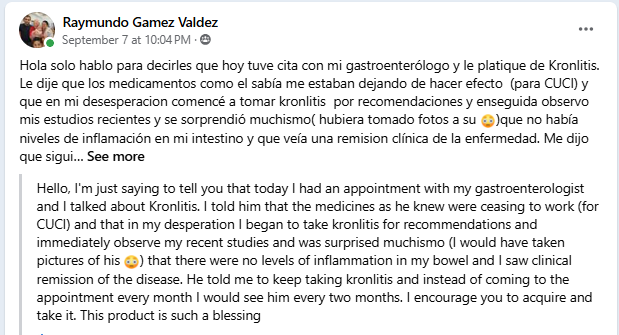
The Kronlitis four-herb formulation represents this integrative approach. Developed specifically for colitis and colon-based Crohn’s disease, it combines traditional Chinese medicinal herbs with documented anti-inflammatory properties. For patients seeking remission support alongside conventional treatment, such formulations offer evidence-informed natural options.
Integration timing matters. During acute diagnostic workups, physicians need clear pictures of disease activity without confounding variables. Once baseline is established and treatment initiated, introducing complementary therapies requires coordination with the care team to monitor for interactions and ensure accurate assessment of what works.
Lifestyle factors diet, stress management, sleep optimization, appropriate exercise form the foundation upon which both conventional and natural therapies build. No supplement or medication compensates for poor lifestyle habits. The most successful long-term outcomes involve comprehensive approaches addressing all aspects of health.
Key Takeaways: From Symptom Recognition to Actionable Testing
Crohn’s disease diagnosis in 2026 follows evidence-based pathways designed to maximize accuracy while minimizing unnecessary procedures. Understanding this process transforms vague symptoms into actionable next steps.
- Fecal calprotectin testing serves as the frontline non-invasive screen, ruling out IBD with 85-90% accuracy and identifying who needs endoscopic evaluation.
- Symptom pattern recognition accelerates diagnosis persistent diarrhea, rectal bleeding, nighttime symptoms, and unexplained weight loss warrant immediate medical evaluation.
- Colonoscopy with biopsy remains the gold standard for definitive diagnosis, providing direct visualization and tissue samples for histopathological confirmation.
- Early detection prevents complications with 19% of patients presenting with complications within 90 days, waiting allows disease progression that could have been prevented.
- Integrative approaches complement conventional care natural anti-inflammatory formulations and lifestyle optimization support remission when combined with medical management.
Taking action starts with symptom awareness. If you recognize these patterns in your own experience, explore natural IBD support options while pursuing medical evaluation. Early intervention consistently produces better outcomes than delayed diagnosis.
Frequently Asked Questions About Crohn’s Disease Testing
How accurate is fecal calprotectin testing for detecting Crohn’s disease?
Highly accurate as a screening tool. Sensitivity ranges from 85-90% for detecting intestinal inflammation specific to IBD. A normal result effectively excludes inflammatory bowel disease in most cases, making it an excellent rule-out test. However, elevated levels cannot distinguish between Crohn’s and ulcerative colitis that determination requires colonoscopy with biopsy.
Do I need to fast before Crohn’s disease blood tests?
No fasting required for most inflammatory markers. CRP, ESR, and CBC can be drawn at any time without dietary preparation. However, if your physician orders comprehensive metabolic panels including glucose or lipid profiles simultaneously, fasting may be necessary. Check specific instructions when scheduling appointments.
How long does a diagnostic colonoscopy for Crohn’s take?
Typically 30-60 minutes. The procedure itself averages 30-45 minutes, with additional time for preparation beforehand and recovery from sedation afterward. Plan for three to four hours total at the facility. Biopsy results take several days to process and interpret by the pathology department.
Is Crohn’s disease testing covered by insurance?
Generally yes when medically indicated. Diagnostic testing ordered by physicians for symptomatic patients typically receives insurance coverage under standard plans. Pre-authorization may be required for certain imaging studies. Out-of-pocket costs vary by plan contact your insurance provider for specific coverage details and potential costs.
Can I use natural therapies while undergoing diagnostic testing?
Consult your physician first. Some supplements can affect test results or interact with diagnostic imaging contrast. Inform your care team about all supplements, herbs, and natural products you use. Once baseline diagnostics are complete and treatment begins, our approach to IBD wellness can guide integrative strategies that complement medical management.
What’s the difference between Crohn’s and ulcerative colitis diagnosis?
Location and pattern distinguish the two conditions. Colonoscopy and biopsy reveal Crohn’s patchy “skip” lesions affecting all bowel wall layers, potentially anywhere from mouth to anus. Ulcerative colitis shows continuous inflammation limited to the colon’s innermost layer. Histopathological examination of biopsy samples provides definitive differentiation between these related but distinct conditions.
@keyframes hoox-lf-in-hoox-f-40fdb3a2-e945-4dda-9a30-d98eae-bottom {
from { opacity: 0; transform: translateY(8px); }
to { opacity: 1; transform: translateY(0); }
}
#hoox-f-40fdb3a2-e945-4dda-9a30-d98eae-bottom {
width: 100%;
max-width: 100%;
box-sizing: border-box;
display: flex;
flex-direction: column;
gap: 20px;
margin: 48px 0;
padding: 32px 28px;
border-radius: 16px;
background: #ffffff;
color: #111111;
font-family: inherit;
border: 1px solid #E2E8F0;
animation: hoox-lf-in-hoox-f-40fdb3a2-e945-4dda-9a30-d98eae-bottom 0.3s cubic-bezier(0.16, 1, 0.3, 1);
direction: inherit;
}
#hoox-f-40fdb3a2-e945-4dda-9a30-d98eae-bottom .hoox-form-header {
display: flex;
flex-direction: column;
gap: 8px;
text-align: center;
}
#hoox-f-40fdb3a2-e945-4dda-9a30-d98eae-bottom .hoox-form-header h2 {
margin: 0;
font-size: 1.5em;
font-weight: 700;
line-height: 1.3;
color: #111111;
border: none;
padding: 0;
}
#hoox-f-40fdb3a2-e945-4dda-9a30-d98eae-bottom .hoox-form-header p {
margin: 0;
font-size: 1em;
line-height: 1.6;
color: #64748B;
}
#hoox-f-40fdb3a2-e945-4dda-9a30-d98eae-bottom form[data-hx-form] {
margin: 0;
display: flex;
flex-direction: column;
gap: 14px;
}
#hoox-f-40fdb3a2-e945-4dda-9a30-d98eae-bottom .hoox-field-wrap {
position: relative;
width: 100%;
box-sizing: border-box;
}
#hoox-f-40fdb3a2-e945-4dda-9a30-d98eae-bottom .hoox-field-wrap input {
width: 100%;
box-sizing: border-box;
height: 44px;
padding-inline-start: 42px;
padding-inline-end: 14px;
border: 1px solid #E2E8F0;
border-radius: 10px;
font-size: 14px;
color: #111111;
font-family: inherit;
background-color: #F8FAFC;
transition: border-color 0.15s ease, box-shadow 0.15s ease, background-color 0.15s ease;
outline: none;
direction: inherit;
text-align: start;
}
#hoox-f-40fdb3a2-e945-4dda-9a30-d98eae-bottom .hoox-field-wrap input::placeholder {
color: #94A3B8;
opacity: 1;
}
#hoox-f-40fdb3a2-e945-4dda-9a30-d98eae-bottom .hoox-field-wrap input:focus {
background-color: #FFFFFF;
border-color: #0077B6,#00B4D8,#90E0EF;
box-shadow: 0 0 0 3px rgba(15, 23, 42, 0.08);
}
#hoox-f-40fdb3a2-e945-4dda-9a30-d98eae-bottom .hoox-field-icon {
position: absolute;
top: 0;
bottom: 0;
inset-inline-start: 0;
width: 42px;
display: flex;
align-items: center;
justify-content: center;
pointer-events: none;
color: #94A3B8;
transition: color 0.15s ease;
}
#hoox-f-40fdb3a2-e945-4dda-9a30-d98eae-bottom .hoox-field-wrap:focus-within .hoox-field-icon {
color: #0077B6,#00B4D8,#90E0EF;
}
#hoox-f-40fdb3a2-e945-4dda-9a30-d98eae-bottom button[type=”submit”] {
width: 100%;
height: 44px;
margin-top: 4px;
border: none;
border-radius: 10px;
background: #0077B6,#00B4D8,#90E0EF;
color: #FFFFFF;
font-size: 14px;
font-weight: 600;
cursor: pointer;
transition: opacity 0.15s ease, transform 0.15s ease, box-shadow 0.15s ease;
box-shadow: 0 1px 2px 0 rgba(0, 0, 0, 0.05);
}
#hoox-f-40fdb3a2-e945-4dda-9a30-d98eae-bottom button[type=”submit”]:hover {
opacity: 0.94;
}
#hoox-f-40fdb3a2-e945-4dda-9a30-d98eae-bottom button[type=”submit”]:active {
transform: scale(0.99);
}
#hoox-f-40fdb3a2-e945-4dda-9a30-d98eae-bottom button[type=”submit”]:disabled {
opacity: 0.6;
cursor: not-allowed;
}
#hoox-f-40fdb3a2-e945-4dda-9a30-d98eae-bottom .hoox-disclaimer {
margin: 0;
text-align: center;
font-size: 12px;
line-height: 1.5;
color: #94A3B8;
}
#hoox-f-40fdb3a2-e945-4dda-9a30-d98eae-bottom .hoox-disclaimer a {
color: inherit;
text-decoration: underline;
text-underline-offset: 2px;
}
#hoox-f-40fdb3a2-e945-4dda-9a30-d98eae-bottom .hoox-disclaimer a:hover {
text-decoration: none;
}
#hoox-f-40fdb3a2-e945-4dda-9a30-d98eae-bottom .hoox-success {
display: none;
flex-direction: column;
align-items: center;
gap: 14px;
padding: 12px 0;
position: relative;
}
#hoox-f-40fdb3a2-e945-4dda-9a30-d98eae-bottom .hoox-confetti {
position: absolute;
inset: 0;
overflow: visible;
pointer-events: none;
}
#hoox-f-40fdb3a2-e945-4dda-9a30-d98eae-bottom .hoox-confetti span {
position: absolute;
top: 50%;
left: 50%;
width: 7px;
height: 11px;
background: var(–hoox-c);
border-radius: 2px;
opacity: 0;
animation: hoox-confetti-burst 0.9s ease-out forwards;
animation-delay: var(–hoox-d, 0s);
}
@keyframes hoox-confetti-burst {
0% { opacity: 1; transform: translate(-50%, -50%) rotate(0deg) scale(1); }
100% { opacity: 0; transform: translate(calc(-50% + var(–hoox-tx)), calc(-50% + var(–hoox-ty))) rotate(var(–hoox-rz)) scale(0.5); }
}
#hoox-f-40fdb3a2-e945-4dda-9a30-d98eae-bottom .hoox-success-icon {
width: 52px;
height: 52px;
border-radius: 50%;
background: #ECFDF5;
display: flex;
align-items: center;
justify-content: center;
font-size: 26px;
line-height: 1;
animation: hoox-success-pop 0.4s cubic-bezier(0.34, 1.56, 0.64, 1);
}
@keyframes hoox-success-pop {
from { opacity: 0; transform: scale(0.5); }
to { opacity: 1; transform: scale(1); }
}
#hoox-f-40fdb3a2-e945-4dda-9a30-d98eae-bottom .hoox-success-text {
margin: 0;
text-align: center;
font-size: 15px;
font-weight: 600;
line-height: 1.5;
color: #111111;
}
#hoox-f-40fdb3a2-e945-4dda-9a30-d98eae-bottom .hoox-disabled-state {
display: none;
flex-direction: column;
align-items: center;
gap: 14px;
padding: 12px 0;
text-align: center;
}
#hoox-f-40fdb3a2-e945-4dda-9a30-d98eae-bottom .hoox-disabled-icon {
width: 52px;
height: 52px;
border-radius: 50%;
background: #F1F5F9;
display: flex;
align-items: center;
justify-content: center;
color: #64748B;
}
#hoox-f-40fdb3a2-e945-4dda-9a30-d98eae-bottom .hoox-disabled-text {
margin: 0;
font-size: 14px;
line-height: 1.6;
color: #64748B;
}
#hoox-f-40fdb3a2-e945-4dda-9a30-d98eae-bottom .hoox-disabled-text a {
color: inherit;
font-weight: 600;
text-decoration: underline;
text-underline-offset: 2px;
}
#hoox-f-40fdb3a2-e945-4dda-9a30-d98eae-bottom .hoox-disabled-text a:hover {
text-decoration: none;
}
See What This Could Look Like For You
Takes 30 seconds
Thanks! We’ll be in touch.