

Difference Between Crohn’s and Ulcerative Colitis
While both Crohn’s disease and ulcerative colitis fall under inflammatory bowel disease (IBD), they differ fundamentally in where inflammation occurs, how deeply tissue damage penetrates, and which symptoms dominate your daily life. Crohn’s can attack anywhere from mouth to anus and burrows through all intestinal layers, while ulcerative colitis restricts itself to the colon’s innermost lining. Understanding these distinctions determines not only your diagnosis but also which natural interventions like targeted herbal formulations can deliver genuine remission rather than temporary symptom masking.
Quick Answer: The Core Distinctions That Define Each Condition
Living with inflammatory bowel disease means understanding exactly what’s happening inside your body. The difference between Crohn’s and ulcerative colitis isn’t just academic it shapes every treatment decision you make. According to Medicaldaily, about 4.1 million adults in the United States have been diagnosed with IBD, and knowing which form you have determines your path forward.
The two conditions share the “IBD” label, but they behave very differently. Crohn’s disease is a whole-digestive-tract condition that can appear anywhere from your mouth to your anus. Ulcerative colitis stays put in your colon and rectum. That location difference matters enormously for inflammatory bowel disease fundamentals because it affects which treatments can actually reach the inflamed tissue.
@keyframes hoox-lf-in-hoox-f-9f5445e5-efbc-42ee-bc41-e23863-top {
from { opacity: 0; transform: translateY(8px); }
to { opacity: 1; transform: translateY(0); }
}
#hoox-f-9f5445e5-efbc-42ee-bc41-e23863-top {
width: 100%;
max-width: 100%;
box-sizing: border-box;
display: flex;
flex-direction: column;
gap: 20px;
margin: 48px 0;
padding: 32px 28px;
border-radius: 16px;
background: #ffffff;
color: #111111;
font-family: inherit;
border: 1px solid #E2E8F0;
animation: hoox-lf-in-hoox-f-9f5445e5-efbc-42ee-bc41-e23863-top 0.3s cubic-bezier(0.16, 1, 0.3, 1);
direction: inherit;
}
#hoox-f-9f5445e5-efbc-42ee-bc41-e23863-top .hoox-form-header {
display: flex;
flex-direction: column;
gap: 8px;
text-align: center;
}
#hoox-f-9f5445e5-efbc-42ee-bc41-e23863-top .hoox-form-header h2 {
margin: 0;
font-size: 1.5em;
font-weight: 700;
line-height: 1.3;
color: #111111;
border: none;
padding: 0;
}
#hoox-f-9f5445e5-efbc-42ee-bc41-e23863-top .hoox-form-header p {
margin: 0;
font-size: 1em;
line-height: 1.6;
color: #64748B;
}
#hoox-f-9f5445e5-efbc-42ee-bc41-e23863-top form[data-hx-form] {
margin: 0;
display: flex;
flex-direction: column;
gap: 14px;
}
#hoox-f-9f5445e5-efbc-42ee-bc41-e23863-top .hoox-field-wrap {
position: relative;
width: 100%;
box-sizing: border-box;
}
#hoox-f-9f5445e5-efbc-42ee-bc41-e23863-top .hoox-field-wrap input {
width: 100%;
box-sizing: border-box;
height: 44px;
padding-inline-start: 42px;
padding-inline-end: 14px;
border: 1px solid #E2E8F0;
border-radius: 10px;
font-size: 14px;
color: #111111;
font-family: inherit;
background-color: #F8FAFC;
transition: border-color 0.15s ease, box-shadow 0.15s ease, background-color 0.15s ease;
outline: none;
direction: inherit;
text-align: start;
}
#hoox-f-9f5445e5-efbc-42ee-bc41-e23863-top .hoox-field-wrap input::placeholder {
color: #94A3B8;
opacity: 1;
}
#hoox-f-9f5445e5-efbc-42ee-bc41-e23863-top .hoox-field-wrap input:focus {
background-color: #FFFFFF;
border-color: #0077B6,#00B4D8,#90E0EF;
box-shadow: 0 0 0 3px rgba(15, 23, 42, 0.08);
}
#hoox-f-9f5445e5-efbc-42ee-bc41-e23863-top .hoox-field-icon {
position: absolute;
top: 0;
bottom: 0;
inset-inline-start: 0;
width: 42px;
display: flex;
align-items: center;
justify-content: center;
pointer-events: none;
color: #94A3B8;
transition: color 0.15s ease;
}
#hoox-f-9f5445e5-efbc-42ee-bc41-e23863-top .hoox-field-wrap:focus-within .hoox-field-icon {
color: #0077B6,#00B4D8,#90E0EF;
}
#hoox-f-9f5445e5-efbc-42ee-bc41-e23863-top button[type=”submit”] {
width: 100%;
height: 44px;
margin-top: 4px;
border: none;
border-radius: 10px;
background: #0077B6,#00B4D8,#90E0EF;
color: #FFFFFF;
font-size: 14px;
font-weight: 600;
cursor: pointer;
transition: opacity 0.15s ease, transform 0.15s ease, box-shadow 0.15s ease;
box-shadow: 0 1px 2px 0 rgba(0, 0, 0, 0.05);
}
#hoox-f-9f5445e5-efbc-42ee-bc41-e23863-top button[type=”submit”]:hover {
opacity: 0.94;
}
#hoox-f-9f5445e5-efbc-42ee-bc41-e23863-top button[type=”submit”]:active {
transform: scale(0.99);
}
#hoox-f-9f5445e5-efbc-42ee-bc41-e23863-top button[type=”submit”]:disabled {
opacity: 0.6;
cursor: not-allowed;
}
#hoox-f-9f5445e5-efbc-42ee-bc41-e23863-top .hoox-disclaimer {
margin: 0;
text-align: center;
font-size: 12px;
line-height: 1.5;
color: #94A3B8;
}
#hoox-f-9f5445e5-efbc-42ee-bc41-e23863-top .hoox-disclaimer a {
color: inherit;
text-decoration: underline;
text-underline-offset: 2px;
}
#hoox-f-9f5445e5-efbc-42ee-bc41-e23863-top .hoox-disclaimer a:hover {
text-decoration: none;
}
#hoox-f-9f5445e5-efbc-42ee-bc41-e23863-top .hoox-success {
display: none;
flex-direction: column;
align-items: center;
gap: 14px;
padding: 12px 0;
position: relative;
}
#hoox-f-9f5445e5-efbc-42ee-bc41-e23863-top .hoox-confetti {
position: absolute;
inset: 0;
overflow: visible;
pointer-events: none;
}
#hoox-f-9f5445e5-efbc-42ee-bc41-e23863-top .hoox-confetti span {
position: absolute;
top: 50%;
left: 50%;
width: 7px;
height: 11px;
background: var(–hoox-c);
border-radius: 2px;
opacity: 0;
animation: hoox-confetti-burst 0.9s ease-out forwards;
animation-delay: var(–hoox-d, 0s);
}
@keyframes hoox-confetti-burst {
0% { opacity: 1; transform: translate(-50%, -50%) rotate(0deg) scale(1); }
100% { opacity: 0; transform: translate(calc(-50% + var(–hoox-tx)), calc(-50% + var(–hoox-ty))) rotate(var(–hoox-rz)) scale(0.5); }
}
#hoox-f-9f5445e5-efbc-42ee-bc41-e23863-top .hoox-success-icon {
width: 52px;
height: 52px;
border-radius: 50%;
background: #ECFDF5;
display: flex;
align-items: center;
justify-content: center;
font-size: 26px;
line-height: 1;
animation: hoox-success-pop 0.4s cubic-bezier(0.34, 1.56, 0.64, 1);
}
@keyframes hoox-success-pop {
from { opacity: 0; transform: scale(0.5); }
to { opacity: 1; transform: scale(1); }
}
#hoox-f-9f5445e5-efbc-42ee-bc41-e23863-top .hoox-success-text {
margin: 0;
text-align: center;
font-size: 15px;
font-weight: 600;
line-height: 1.5;
color: #111111;
}
#hoox-f-9f5445e5-efbc-42ee-bc41-e23863-top .hoox-disabled-state {
display: none;
flex-direction: column;
align-items: center;
gap: 14px;
padding: 12px 0;
text-align: center;
}
#hoox-f-9f5445e5-efbc-42ee-bc41-e23863-top .hoox-disabled-icon {
width: 52px;
height: 52px;
border-radius: 50%;
background: #F1F5F9;
display: flex;
align-items: center;
justify-content: center;
color: #64748B;
}
#hoox-f-9f5445e5-efbc-42ee-bc41-e23863-top .hoox-disabled-text {
margin: 0;
font-size: 14px;
line-height: 1.6;
color: #64748B;
}
#hoox-f-9f5445e5-efbc-42ee-bc41-e23863-top .hoox-disabled-text a {
color: inherit;
font-weight: 600;
text-decoration: underline;
text-underline-offset: 2px;
}
#hoox-f-9f5445e5-efbc-42ee-bc41-e23863-top .hoox-disabled-text a:hover {
text-decoration: none;
}
See What This Could Look Like For You
Takes 30 seconds
Thanks! We’ll be in touch.
| Dimension | Crohn’s Disease | Ulcerative Colitis |
|---|---|---|
| Location | Mouth to anus (anywhere along digestive tract) | Colon and rectum only |
| Tissue Depth | Transmural (all layers) | Mucosal (inner lining only) |
| Bleeding Pattern | Intermittent, often hidden in stool | Prominent, visible rectal bleeding |
| Complication Risk | Fistulas, strictures, abscesses common | Toxic megacolon, colon cancer risk elevated |
| Remission Patterns | Harder to achieve, often requires surgery | More achievable with colon-focused treatment |

Think of it this way: Crohn’s is the deep-diver of IBD, tunneling through every tissue layer and causing structural damage that creates holes and narrowings. Colitis stays on the surface, causing intense inflammation but rarely burrowing through the wall. This depth distinction explains why Crohn’s patients face more surgical interventions they develop complications that medications alone cannot resolve.
Where Inflammation Strikes: Anatomical Location Patterns [2026 Data]
Crohn’s disease doesn’t follow rules. It can skip entire sections of healthy intestine and attack somewhere else entirely. Doctors call these “skip lesions” patchy areas of inflammation with normal tissue in between. This unpredictable pattern makes diagnosis harder and treatment more complex because you’re never quite sure where inflammation will appear next.
Ulcerative colitis plays by different rules. It starts in the rectum and works its way backward through the colon in a continuous stretch. No skipping, no gaps. The inflammation spreads as a single patch that extends however far it’s going to go. This predictable pattern actually helps with diagnosis and means targeted IBD solutions can focus treatment directly on the colon.
- Crohn’s Locations: Mouth (oral ulcers), esophagus, stomach, small intestine (most common site), large intestine, anus (fissures and fistulas)
- Crohn’s Locations: Any segment of the 30-foot digestive tract
- Crohn’s Locations: Ileocecal valve junction (where small meets large intestine)
- Crohn’s Locations: Perianal region (causing significant external complications)
- Ulcerative Colitis Location: Colon and rectum only nowhere else
- Ulcerative Colitis Location: Continuous inflammation starting from rectum
This location difference explains why certain interventions work better for colitis. Herbal formulations that coat and soothe the colon lining have a direct target with ulcerative colitis. Crohn’s inflammation might be hiding in the small intestine where topical treatments can’t easily reach. According to Nih, a multinational cohort study involving over a million patients with IBD across seven countries revealed significant differences in disease trajectories based on geographical location and treatment approaches.
For patients researching digestive inflammation options, understanding your specific disease location matters enormously. A product formulated for colitis patients targets the colon directly which is exactly where colitis lives. Crohn’s patients need systemic approaches that can reach the entire digestive tract, or they need their disease to be primarily colon-based to benefit from colon-targeted therapies.
Tissue Penetration Depth: Why Crohn’s Creates Fistulas While Colitis Doesn’t
Here’s where the comparison gets serious. Crohn’s disease is transmural it burns through all layers of the intestinal wall. The mucosa, submucosa, muscle layers, and outer serosa all become targets. This deep penetration creates tunnels between intestinal segments or between the intestine and other organs. These abnormal connections are called fistulas, and they’re uniquely a Crohn’s complication because ulcerative colitis simply doesn’t penetrate deeply enough to create them.
Ulcerative colitis stays on the surface specifically, the mucosal layer. That innermost lining becomes inflamed, ulcerated, and bloody, but the disease respects the boundary. It doesn’t tunnel. It doesn’t create holes. This limitation actually protects colitis patients from developing fistulas, though they face their own set of serious complications including the risk of colon cancer after prolonged inflammation.
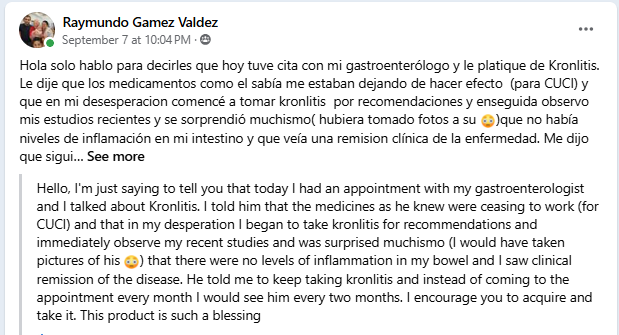
This depth difference has treatment implications that many patients don’t realize. herbal approach to deep inflammation must reach all tissue layers to benefit Crohn’s patients fully. Surface-level treatments enemas, topical applicators work beautifully for colitis because the disease lives on the surface. Crohn’s patients often need oral systemic treatments that can deliver anti-inflammatory compounds throughout the digestive tract and into deeper tissue layers.
Crohn’s transmural inflammation explains why approximately 50% of patients require surgery within 10 years of diagnosis deep tissue damage creates complications that medications cannot reverse, including bowel obstructions from scar tissue and abscesses from bacterial invasion through intestinal perforations.
The abscess risk in Crohn’s comes directly from this penetrating inflammation. When the intestinal wall develops small holes, bacteria that normally live inside your gut escape into the abdominal cavity. The immune system walls them off, creating pockets of infection that require drainage and antibiotics. Colitis doesn’t cause these abscesses because the intestinal wall remains intact despite the inflammation.
The Complication Profile: Strictures, Perforations, and Surgical Intervention Rates
Crohn’s leaves scars. Every episode of deep inflammation heals with fibrosis thickened, non-functional tissue that narrows the intestinal opening. These strictures can eventually block food passage entirely, requiring surgical intervention. The chronic inflammation also increases cancer risk in the affected areas, though this risk is lower than with extensive ulcerative colitis.

Ulcerative colitis complications cluster differently. patient experiences with disease complications show that while colitis patients don’t typically develop fistulas or strictures, they face a distinct set of risks. After eight to ten years of continuous inflammation, colon cancer surveillance becomes essential. The inflamed tissue becomes dysplastic, creating precancerous changes that require careful monitoring or preventive surgery.
- Crohn’s Complications: Intestinal strictures causing bowel obstruction
- Crohn’s Complications: Fistulas connecting intestine to bladder, skin, or vagina
- Crohn’s Complications: Intra-abdominal abscesses requiring drainage
- Crohn’s Complications: Malnutrition from malabsorption in damaged small intestine
- Crohn’s Complications: Perianal disease including fissures and abscesses
- Colitis Complications: Severe bleeding episodes requiring transfusion
- Colitis Complications: Toxic megacolon (life-threatening colon dilation)
- Colitis Complications: Colon cancer risk after prolonged disease duration
- Colitis Complications: Primary sclerosing cholangitis (bile duct inflammation)
- Colitis Complications: Osteoporosis from chronic inflammation and steroid use
Symptom Presentation: Bleeding Patterns, Pain Location, and Daily Impact
Living with IBD means learning your symptom language. Crohn’s patients often describe a gnawing, cramping pain in the lower right abdomen near the ileocecal valve where small intestine meets large. The pain often correlates with eating, because food moving through narrowed intestinal segments triggers discomfort. Weight loss happens frequently, not just from appetite loss but from actual malabsorption of nutrients.
Ulcerative colitis tells a different story. understanding your IBD symptoms starts with recognizing that bloody diarrhea is the hallmark. The rectal bleeding is prominent, visible, and often alarming. Patients describe urgency the sensation of needing to reach a bathroom immediately which comes from rectal inflammation that disrupts normal storage function. According to Cdc, about 4.1 million adults in the United States have been diagnosed with IBD, and symptom recognition remains the critical first step toward proper treatment.
| Symptom Category | Crohn’s Disease | Ulcerative Colitis |
|---|---|---|
| Rectal Bleeding | Less common, often microscopic | Very common, prominently visible |
| Abdominal Pain Location | Lower right quadrant typical | Lower left quadrant common |
| Bowel Movement Frequency | Variable, often 4-6 per day | Higher frequency, often 10+ per day |
| Nighttime Symptoms | Common, disrupts sleep | Very common, urgency prominent |
| Weight Loss | Significant, from malabsorption | Moderate, from reduced intake |
| Nausea and Vomiting | Common with obstruction | Less frequent |
| Perianal Symptoms | Fistulas, fissures, tags | Minimal external involvement |