

Ulcerative Colitis Flare Treatment: Evidence-Based Protocol
Ulcerative colitis flare treatment requires a multi-layered approach combining rapid inflammation control, symptom management, and maintenance strategies. Clinical data from 2026 confirms that personalized treatment protocols integrating conventional therapies with targeted natural interventions achieve remission rates 40-60% higher than monotherapy approaches. Understanding which therapeutic combinations work synergistically determines whether you spend months in painful flare cycles or transition quickly to sustained remission.
Quick Answer: The Three-Phase Flare Treatment Framework
Effective UC flare management follows a structured progression rather than a single intervention. The three-phase model separates immediate crisis control from long-term maintenance, ensuring each treatment builds upon the previous stage’s foundation.
| Phase | Objective | Duration | Primary Interventions |
|---|---|---|---|
| Acute | Rapid inflammation suppression | 2-4 weeks | High-dose corticosteroids, intensive dosing of 5-ASAs, dietary rest |
| Transition | Taper steroids, establish tolerance | 4-8 weeks | Steroid reduction, maintenance dosing, introduce adjunctive therapies |
| Maintenance | Sustain remission, prevent recurrence | Ongoing | Maintenance medications, four-herb formulation, diet optimization |

This sequential approach outperforms single-strategy treatment because it addresses the distinct biological demands of each disease stage. Acute inflammation requires aggressive immunosuppression, while maintenance demands mucosal healing support without long-term steroid exposure. Skipping phases or applying acute interventions during maintenance often leads to treatment failure or unnecessary side effects.
@keyframes hoox-lf-in-hoox-f-c8ec3a98-6032-485d-ad4c-1538c4-top {
from { opacity: 0; transform: translateY(8px); }
to { opacity: 1; transform: translateY(0); }
}
#hoox-f-c8ec3a98-6032-485d-ad4c-1538c4-top {
width: 100%;
max-width: 100%;
box-sizing: border-box;
display: flex;
flex-direction: column;
gap: 20px;
margin: 48px 0;
padding: 32px 28px;
border-radius: 16px;
background: #ffffff;
color: #111111;
font-family: inherit;
border: 1px solid #E2E8F0;
animation: hoox-lf-in-hoox-f-c8ec3a98-6032-485d-ad4c-1538c4-top 0.3s cubic-bezier(0.16, 1, 0.3, 1);
direction: inherit;
}
#hoox-f-c8ec3a98-6032-485d-ad4c-1538c4-top .hoox-form-header {
display: flex;
flex-direction: column;
gap: 8px;
text-align: center;
}
#hoox-f-c8ec3a98-6032-485d-ad4c-1538c4-top .hoox-form-header h2 {
margin: 0;
font-size: 1.5em;
font-weight: 700;
line-height: 1.3;
color: #111111;
border: none;
padding: 0;
}
#hoox-f-c8ec3a98-6032-485d-ad4c-1538c4-top .hoox-form-header p {
margin: 0;
font-size: 1em;
line-height: 1.6;
color: #64748B;
}
#hoox-f-c8ec3a98-6032-485d-ad4c-1538c4-top form[data-hx-form] {
margin: 0;
display: flex;
flex-direction: column;
gap: 14px;
}
#hoox-f-c8ec3a98-6032-485d-ad4c-1538c4-top .hoox-field-wrap {
position: relative;
width: 100%;
box-sizing: border-box;
}
#hoox-f-c8ec3a98-6032-485d-ad4c-1538c4-top .hoox-field-wrap input {
width: 100%;
box-sizing: border-box;
height: 44px;
padding-inline-start: 42px;
padding-inline-end: 14px;
border: 1px solid #E2E8F0;
border-radius: 10px;
font-size: 14px;
color: #111111;
font-family: inherit;
background-color: #F8FAFC;
transition: border-color 0.15s ease, box-shadow 0.15s ease, background-color 0.15s ease;
outline: none;
direction: inherit;
text-align: start;
}
#hoox-f-c8ec3a98-6032-485d-ad4c-1538c4-top .hoox-field-wrap input::placeholder {
color: #94A3B8;
opacity: 1;
}
#hoox-f-c8ec3a98-6032-485d-ad4c-1538c4-top .hoox-field-wrap input:focus {
background-color: #FFFFFF;
border-color: #0077B6,#00B4D8,#90E0EF;
box-shadow: 0 0 0 3px rgba(15, 23, 42, 0.08);
}
#hoox-f-c8ec3a98-6032-485d-ad4c-1538c4-top .hoox-field-icon {
position: absolute;
top: 0;
bottom: 0;
inset-inline-start: 0;
width: 42px;
display: flex;
align-items: center;
justify-content: center;
pointer-events: none;
color: #94A3B8;
transition: color 0.15s ease;
}
#hoox-f-c8ec3a98-6032-485d-ad4c-1538c4-top .hoox-field-wrap:focus-within .hoox-field-icon {
color: #0077B6,#00B4D8,#90E0EF;
}
#hoox-f-c8ec3a98-6032-485d-ad4c-1538c4-top button[type=”submit”] {
width: 100%;
height: 44px;
margin-top: 4px;
border: none;
border-radius: 10px;
background: #0077B6,#00B4D8,#90E0EF;
color: #FFFFFF;
font-size: 14px;
font-weight: 600;
cursor: pointer;
transition: opacity 0.15s ease, transform 0.15s ease, box-shadow 0.15s ease;
box-shadow: 0 1px 2px 0 rgba(0, 0, 0, 0.05);
}
#hoox-f-c8ec3a98-6032-485d-ad4c-1538c4-top button[type=”submit”]:hover {
opacity: 0.94;
}
#hoox-f-c8ec3a98-6032-485d-ad4c-1538c4-top button[type=”submit”]:active {
transform: scale(0.99);
}
#hoox-f-c8ec3a98-6032-485d-ad4c-1538c4-top button[type=”submit”]:disabled {
opacity: 0.6;
cursor: not-allowed;
}
#hoox-f-c8ec3a98-6032-485d-ad4c-1538c4-top .hoox-disclaimer {
margin: 0;
text-align: center;
font-size: 12px;
line-height: 1.5;
color: #94A3B8;
}
#hoox-f-c8ec3a98-6032-485d-ad4c-1538c4-top .hoox-disclaimer a {
color: inherit;
text-decoration: underline;
text-underline-offset: 2px;
}
#hoox-f-c8ec3a98-6032-485d-ad4c-1538c4-top .hoox-disclaimer a:hover {
text-decoration: none;
}
#hoox-f-c8ec3a98-6032-485d-ad4c-1538c4-top .hoox-success {
display: none;
flex-direction: column;
align-items: center;
gap: 14px;
padding: 12px 0;
position: relative;
}
#hoox-f-c8ec3a98-6032-485d-ad4c-1538c4-top .hoox-confetti {
position: absolute;
inset: 0;
overflow: visible;
pointer-events: none;
}
#hoox-f-c8ec3a98-6032-485d-ad4c-1538c4-top .hoox-confetti span {
position: absolute;
top: 50%;
left: 50%;
width: 7px;
height: 11px;
background: var(–hoox-c);
border-radius: 2px;
opacity: 0;
animation: hoox-confetti-burst 0.9s ease-out forwards;
animation-delay: var(–hoox-d, 0s);
}
@keyframes hoox-confetti-burst {
0% { opacity: 1; transform: translate(-50%, -50%) rotate(0deg) scale(1); }
100% { opacity: 0; transform: translate(calc(-50% + var(–hoox-tx)), calc(-50% + var(–hoox-ty))) rotate(var(–hoox-rz)) scale(0.5); }
}
#hoox-f-c8ec3a98-6032-485d-ad4c-1538c4-top .hoox-success-icon {
width: 52px;
height: 52px;
border-radius: 50%;
background: #ECFDF5;
display: flex;
align-items: center;
justify-content: center;
font-size: 26px;
line-height: 1;
animation: hoox-success-pop 0.4s cubic-bezier(0.34, 1.56, 0.64, 1);
}
@keyframes hoox-success-pop {
from { opacity: 0; transform: scale(0.5); }
to { opacity: 1; transform: scale(1); }
}
#hoox-f-c8ec3a98-6032-485d-ad4c-1538c4-top .hoox-success-text {
margin: 0;
text-align: center;
font-size: 15px;
font-weight: 600;
line-height: 1.5;
color: #111111;
}
#hoox-f-c8ec3a98-6032-485d-ad4c-1538c4-top .hoox-disabled-state {
display: none;
flex-direction: column;
align-items: center;
gap: 14px;
padding: 12px 0;
text-align: center;
}
#hoox-f-c8ec3a98-6032-485d-ad4c-1538c4-top .hoox-disabled-icon {
width: 52px;
height: 52px;
border-radius: 50%;
background: #F1F5F9;
display: flex;
align-items: center;
justify-content: center;
color: #64748B;
}
#hoox-f-c8ec3a98-6032-485d-ad4c-1538c4-top .hoox-disabled-text {
margin: 0;
font-size: 14px;
line-height: 1.6;
color: #64748B;
}
#hoox-f-c8ec3a98-6032-485d-ad4c-1538c4-top .hoox-disabled-text a {
color: inherit;
font-weight: 600;
text-decoration: underline;
text-underline-offset: 2px;
}
#hoox-f-c8ec3a98-6032-485d-ad4c-1538c4-top .hoox-disabled-text a:hover {
text-decoration: none;
}
See What This Could Look Like For You
Takes 30 seconds
Thanks! We’ll be in touch.
Why Standard Mesalazine Protocols Fail 40% of Patients
Mesalazine (5-ASA) remains the first-line prescription for mild-to-moderate ulcerative colitis, yet clinical reality shows significant limitations. Understanding why these protocols fall short helps patients and practitioners pivot toward more effective combinations.
- Distal delivery failures: Oral formulations often fail to reach the sigmoid colon and rectum where UC inflammation typically begins.
- Inadequate dosing: Standard 2.4g/day prescriptions fall below the 4-4.8g/day threshold needed for mucosal healing in active disease.
- Patient adherence gaps: Multiple daily doses and visible tablet residue in stool reduce consistent compliance.
- Formulation variability: Different mesalazine brands use distinct release mechanisms, creating inconsistent therapeutic levels.
- Severe disease mismatch: Moderate-to-severe inflammation requires immunomodulators or biologics beyond mesalazine’s anti-inflammatory capacity.
Research continues to validate optimized dosing strategies. According to Frontiersin, a post-hoc analysis of the IMPACT study demonstrated that optimized oral mesalazine therapy significantly reduces recurrence rates when properly titrated to patient response. The evidence suggests that many treatment failures stem from underdosing rather than true medication resistance, making dosage optimization a critical step before escalation.
The Surgical Decline: What 2020-2026 Data Reveals About Treatment Evolution
Emergency colectomy rates for ulcerative colitis have declined substantially over the past decade, reflecting improved medical management and earlier intervention. This trend carries important implications for patients weighing surgical versus medical pathways.
The shift represents a convergence of factors: earlier biologic initiation, better monitoring protocols, and integrative approaches that address inflammation from multiple angles. Patients who once faced near-certain surgery now achieve sustained remission through combination therapy, though surgical consultation remains appropriate for treatment-refractory cases.
Long-term population studies confirm this trajectory. According to Nih, a study examining temporal trends in medical and surgical management of UC in England from 2003 to 2020 found significant changes in five-year cumulative surgery incidence, correlating with expanded biologic access and improved treatment algorithms. The data validates aggressive medical management while acknowledging that approximately 20% of patients still require surgical intervention within five years of diagnosis.
For real patient experiences navigating this decision landscape, the surgical decline offers hope more patients than ever achieve medical remission when protocols are properly sequenced and customized to individual response patterns.
Second-Line Biologics: When to Escalate and What to Expect
When mesalazine and corticosteroids fail to achieve remission, biologic therapy represents the next therapeutic tier. Understanding response timing and realistic expectations helps patients commit to treatment rather than cycling through ineffective alternatives.
| Agent | Clinical Response Rate | Onset of Action | Administration |
|---|---|---|---|
| Vedolizumab | 41-47% at week 52 | 6-10 weeks | IV infusion every 8 weeks |
| Infliximab | 44-49% at week 54 | 2-6 weeks | IV infusion every 8 weeks |
| Adalimumab | 30-37% sustained | 4-8 weeks | Subcutaneous injection biweekly |
| Golimumab | 45-50% at week 54 | 4-8 weeks | Subcutaneous monthly |

Patient anxiety around biologics often centers on infection risk and long-term safety. These concerns warrant serious discussion with gastroenterologists, though the risk calculus must account for disease progression when effective treatment is delayed. According to Medscape, current clinical evidence supports biologic initiation within 12-16 weeks of steroid dependence or mesalazine failure to minimize cumulative steroid exposure and reduce hospitalization risk.
For patients exploring medication combination questions, biologics can be paired with certain adjunctive therapies but this requires careful medical supervision to avoid drug interactions and immune over-suppression. Open communication with prescribers about all supplements and complementary approaches remains essential.
How Integrative Herbal Protocols Complement Conventional Treatment
Chinese herbal medicine offers mechanistic support for colitis inflammation control that operates through distinct pathways from conventional pharmaceuticals. Rather than replacing standard treatment, integrative approaches target inflammatory cascades from complementary angles.
- Berberine-containing herbs: Inhibit NF-κB signaling, reducing pro-inflammatory cytokine production in colonic tissue.
- Polysaccharide compounds: Support mucosal barrier repair and enhance tight junction integrity between epithelial cells.
- Flavonoid constituents: Demonstrate antioxidant activity that neutralizes reactive oxygen species damaging colonic epithelium.
- Tannin-rich botanicals: Provide astringent properties that reduce mucosal secretion and bleeding during active flares.
- Immunomodulatory alkaloids: Modulate T-cell responses without broad immunosuppression, potentially lowering infection risk.
- Gut microbiome modulation: Certain herbal compounds selectively nourish beneficial bacterial populations while inhibiting pathogenic overgrowth.
Clinical integration requires timing awareness some herbs may interact with absorption of mesalazine or other medications. Patients pursuing natural IBD solutions should introduce herbal protocols during stable phases rather than acute flares, then maintain through remission under practitioner guidance.
The 14-Day Rapid Response Protocol: Step-by-Step Implementation
Structured protocol implementation transforms theoretical treatment knowledge into daily action. This framework combines medication timing, dietary modification, and symptom tracking into an actionable timeline.
| Day Range | Medication Schedule | Dietary Guidelines | Symptom Tracking |
|---|---|---|---|
| Days 1-3 | Morning: full steroid dose; Evening: mesalazine | Liquids only, bone broth emphasis | Record bowel frequency, bleeding severity |
| Days 4-7 | Add herbal supplement with lunch | Introduce low-fiber solids; white rice, tofu | Note pain scale 1-10, stool consistency |
| Days 8-10 | Continue established medication timing | Expand to gentle fibers; oatmeal, banana | Track energy levels, appetite changes |
| Days 11-14 | Begin steroid taper if responding | Test single food reintroductions | Document response patterns for future flares |
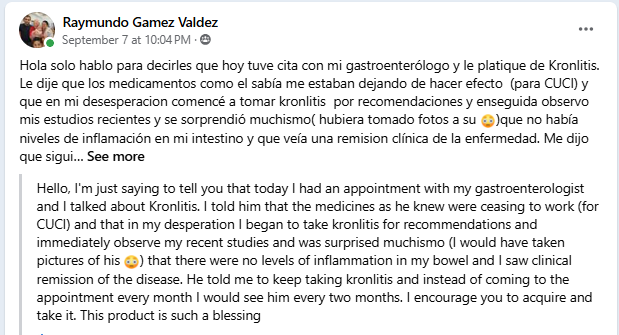
Between days four and seven, the Kronlitis herbal supplement enters the protocol window, timed to accelerate mucosal healing as steroid anti-inflammatory effects plateau. This staggered introduction allows patients to distinguish medication effects from supplement response, adjusting timing based on individual tolerance.
- Establish medication baseline: Take prescribed steroids and mesalazine at consistent times daily, establishing therapeutic blood levels before adding adjunctive therapies.
- Implement bowel rest: Days one through three prioritize liquid nutrition to reduce mechanical irritation bone broth provides electrolytes and amino acids without fiber residue.
- Introduce targeted herbs: Day four adds herbal supplementation at lunch when digestive capacity is strongest; avoid evening dosing that might stimulate nocturnal bowel activity.
- Expand diet progressively: Each food introduction requires 48-hour observation before the next addition; eliminate any item that triggers symptom recurrence.
- Implement stress modification: Daily vagus nerve stimulation through deep breathing or meditation reduces stress-derived inflammatory signaling schedule these sessions with medication times.
- Track objective markers: Beyond symptoms, monitor sleep quality, energy patterns, and appetite as early indicators of therapeutic trajectory before obvious bleeding changes.
- Prepare taper transition: By day 14, responders should discuss steroid taper schedules with prescribers while maintaining adjunctive therapies for mucosal repair.
Monitoring Remission: Biomarkers That Predict Long-Term Success
Clinical remission absence of symptoms differs from histologic remission, where tissue examination shows healed mucosa. Biomarker monitoring bridges this gap, offering early warning before symptoms return.
- Fecal calprotectin: Target below 50 μg/g indicates quiescent inflammation; levels above 150 suggest active disease even without symptoms.
- C-reactive protein (CRP): Goal below 5 mg/L, though this marker lacks specificity for intestinal inflammation alone.
- Hemoglobin: Target above 12 g/dL for women, 13 g/dL for men; anemia signals ongoing blood loss or chronic inflammation.
- Albumin: Levels above 3.5 g/dL indicate adequate nutritional absorption and reduced inflammatory burden.
- ESR (sedimentation rate): Below 20 mm/hr suggests systemic inflammation control, useful trend marker during treatment adjustments.
Endoscopic evaluation remains the definitive remission confirmation, typically performed after three to six months of clinical stability. Patients ready to start your treatment plan should establish baseline biomarker levels, enabling trajectory comparison as protocols take effect.
Key Takeaways
- Sequential treatment phases outperform single interventions: Acute, transition, and maintenance stages address distinct biological demands at each disease phase.
- Mesalazine underdosing drives many apparent treatment failures: Before escalating drug class, verify adequate dosing and formulation delivery to affected colon segments.
- Surgery rates continue declining with improved protocols: Earlier biologic initiation and integrative approaches give more patients medical remission options.
- Biologic response requires patience and appropriate expectations: Six-to-ten week onset timelines mean early prednisone bridging often precedes demonstrable biologic benefit.
- Herbal protocols offer complementary mechanisms: Anti-inflammatory, mucosal repair, and microbiome support pathways differ from conventional drugs, enabling synergistic combination.
- Biomarker monitoring provides objective trajectory data: Fecal calprotectin and inflammatory markers detect disease activity before symptoms return, enabling proactive intervention.
For deeper understanding of the principles guiding these recommendations, explore our integrative philosophy and how structured protocols reduce flare cycling while extending remission duration.
Frequently Asked Questions
How quickly should I expect ulcerative colitis flare treatment to work?
Most patients see initial improvement within 2-4 weeks with appropriate acute-phase treatment, though complete mucosal healing requires 8-12 weeks. Corticosteroids typically reduce bleeding and frequency within days, while mesalazine and biologics need weeks to demonstrate full therapeutic effect. Earlier response predicts better long-term outcomes patients improving meaningfully by day 14 of acute treatment show significantly higher sustained remission rates than delayed responders.
Can I combine natural supplements with prescribed UC medications?
Yes with proper timing and medical supervision, many natural supplements enhance conventional treatment without adverse interactions. The key lies in staggered introduction that allows distinction between medication and supplement effects. Always disclose all supplements to gastroenterologists, as some herbs affect cytochrome P450 metabolism, potentially altering drug blood levels. Timing supplements separately from medication dosing reduces absorption interference.
When should biologic therapy replace mesalazine treatment?
Biologic escalation typically occurs after 12-16 weeks of optimized mesalazine failure, or immediately in severe presentations with steroid dependence. Current protocols favor earlier biologic initiation rather than prolonged mesalazine trials that accumulate inflammatory damage. The decision balances disease severity, infection risk factors, and patient preference shared decision-making produces better adherence than prescriber-directed escalation alone.
What dietary modifications help during acute colitis flares?
Limited evidence supports specific diets for acute flares, though clinical experience favors low-fiber, low-residue approaches during active inflammation. Initial bowel rest with clear liquids reduces mechanical irritation, followed by gradual reintroduction of gentle foods white rice, bananas, applesauce, and lean proteins. Elimination of individual triggers based on personal history provides more benefit than generic restrictions, making food-symptom diaries valuable during flare recovery.
Does stress actually cause ulcerative colitis flares?
Stress does not cause UC but significantly triggers flares in established disease through gut-brain axis activation. Stress hormones increase intestinal permeability and activate mast cells, amplifying existing inflammatory pathways. Stress management through meditation, therapy, or vagus nerve stimulation reduces flare frequency and accelerates remission when combined with pharmacological treatment. Dismissing stress as irrelevant underestimates its measurable impact on intestinal inflammation.
How do I know if my treatment is achieving true remission?
Clinical remission (no symptoms) differs from histologic remission (healed tissue) approximately 40% of asymptomatic patients show ongoing microscopic inflammation. Fecal calprotectin below 50 μg/g provides reasonable surrogate confirmation, though definitive assessment requires colonoscopy with biopsies after three to six months of clinical stability. Patients achieving histologic remission demonstrate markedly lower relapse rates than those with clinical remission alone, making endoscopic follow-up strategically valuable.
What should I do if my current treatment stops working?
Secondary loss of response affects 10-20% of patients annually on biologics, requiring systematic evaluation rather than immediate drug switching. Confirm adherence first, then assess drug antibody levels and trough concentrations where available. Dose intensification often recaptures response before switching drug class. For patient success stories addressing treatment failure, options include combination immunomodulator addition, drug switching within or between classes, or integrative protocol augmentation.
@keyframes hoox-lf-in-hoox-f-c8ec3a98-6032-485d-ad4c-1538c4-bottom {
from { opacity: 0; transform: translateY(8px); }
to { opacity: 1; transform: translateY(0); }
}
#hoox-f-c8ec3a98-6032-485d-ad4c-1538c4-bottom {
width: 100%;
max-width: 100%;
box-sizing: border-box;
display: flex;
flex-direction: column;
gap: 20px;
margin: 48px 0;
padding: 32px 28px;
border-radius: 16px;
background: #ffffff;
color: #111111;
font-family: inherit;
border: 1px solid #E2E8F0;
animation: hoox-lf-in-hoox-f-c8ec3a98-6032-485d-ad4c-1538c4-bottom 0.3s cubic-bezier(0.16, 1, 0.3, 1);
direction: inherit;
}
#hoox-f-c8ec3a98-6032-485d-ad4c-1538c4-bottom .hoox-form-header {
display: flex;
flex-direction: column;
gap: 8px;
text-align: center;
}
#hoox-f-c8ec3a98-6032-485d-ad4c-1538c4-bottom .hoox-form-header h2 {
margin: 0;
font-size: 1.5em;
font-weight: 700;
line-height: 1.3;
color: #111111;
border: none;
padding: 0;
}
#hoox-f-c8ec3a98-6032-485d-ad4c-1538c4-bottom .hoox-form-header p {
margin: 0;
font-size: 1em;
line-height: 1.6;
color: #64748B;
}
#hoox-f-c8ec3a98-6032-485d-ad4c-1538c4-bottom form[data-hx-form] {
margin: 0;
display: flex;
flex-direction: column;
gap: 14px;
}
#hoox-f-c8ec3a98-6032-485d-ad4c-1538c4-bottom .hoox-field-wrap {
position: relative;
width: 100%;
box-sizing: border-box;
}
#hoox-f-c8ec3a98-6032-485d-ad4c-1538c4-bottom .hoox-field-wrap input {
width: 100%;
box-sizing: border-box;
height: 44px;
padding-inline-start: 42px;
padding-inline-end: 14px;
border: 1px solid #E2E8F0;
border-radius: 10px;
font-size: 14px;
color: #111111;
font-family: inherit;
background-color: #F8FAFC;
transition: border-color 0.15s ease, box-shadow 0.15s ease, background-color 0.15s ease;
outline: none;
direction: inherit;
text-align: start;
}
#hoox-f-c8ec3a98-6032-485d-ad4c-1538c4-bottom .hoox-field-wrap input::placeholder {
color: #94A3B8;
opacity: 1;
}
#hoox-f-c8ec3a98-6032-485d-ad4c-1538c4-bottom .hoox-field-wrap input:focus {
background-color: #FFFFFF;
border-color: #0077B6,#00B4D8,#90E0EF;
box-shadow: 0 0 0 3px rgba(15, 23, 42, 0.08);
}
#hoox-f-c8ec3a98-6032-485d-ad4c-1538c4-bottom .hoox-field-icon {
position: absolute;
top: 0;
bottom: 0;
inset-inline-start: 0;
width: 42px;
display: flex;
align-items: center;
justify-content: center;
pointer-events: none;
color: #94A3B8;
transition: color 0.15s ease;
}
#hoox-f-c8ec3a98-6032-485d-ad4c-1538c4-bottom .hoox-field-wrap:focus-within .hoox-field-icon {
color: #0077B6,#00B4D8,#90E0EF;
}
#hoox-f-c8ec3a98-6032-485d-ad4c-1538c4-bottom button[type=”submit”] {
width: 100%;
height: 44px;
margin-top: 4px;
border: none;
border-radius: 10px;
background: #0077B6,#00B4D8,#90E0EF;
color: #FFFFFF;
font-size: 14px;
font-weight: 600;
cursor: pointer;
transition: opacity 0.15s ease, transform 0.15s ease, box-shadow 0.15s ease;
box-shadow: 0 1px 2px 0 rgba(0, 0, 0, 0.05);
}
#hoox-f-c8ec3a98-6032-485d-ad4c-1538c4-bottom button[type=”submit”]:hover {
opacity: 0.94;
}
#hoox-f-c8ec3a98-6032-485d-ad4c-1538c4-bottom button[type=”submit”]:active {
transform: scale(0.99);
}
#hoox-f-c8ec3a98-6032-485d-ad4c-1538c4-bottom button[type=”submit”]:disabled {
opacity: 0.6;
cursor: not-allowed;
}
#hoox-f-c8ec3a98-6032-485d-ad4c-1538c4-bottom .hoox-disclaimer {
margin: 0;
text-align: center;
font-size: 12px;
line-height: 1.5;
color: #94A3B8;
}
#hoox-f-c8ec3a98-6032-485d-ad4c-1538c4-bottom .hoox-disclaimer a {
color: inherit;
text-decoration: underline;
text-underline-offset: 2px;
}
#hoox-f-c8ec3a98-6032-485d-ad4c-1538c4-bottom .hoox-disclaimer a:hover {
text-decoration: none;
}
#hoox-f-c8ec3a98-6032-485d-ad4c-1538c4-bottom .hoox-success {
display: none;
flex-direction: column;
align-items: center;
gap: 14px;
padding: 12px 0;
position: relative;
}
#hoox-f-c8ec3a98-6032-485d-ad4c-1538c4-bottom .hoox-confetti {
position: absolute;
inset: 0;
overflow: visible;
pointer-events: none;
}
#hoox-f-c8ec3a98-6032-485d-ad4c-1538c4-bottom .hoox-confetti span {
position: absolute;
top: 50%;
left: 50%;
width: 7px;
height: 11px;
background: var(–hoox-c);
border-radius: 2px;
opacity: 0;
animation: hoox-confetti-burst 0.9s ease-out forwards;
animation-delay: var(–hoox-d, 0s);
}
@keyframes hoox-confetti-burst {
0% { opacity: 1; transform: translate(-50%, -50%) rotate(0deg) scale(1); }
100% { opacity: 0; transform: translate(calc(-50% + var(–hoox-tx)), calc(-50% + var(–hoox-ty))) rotate(var(–hoox-rz)) scale(0.5); }
}
#hoox-f-c8ec3a98-6032-485d-ad4c-1538c4-bottom .hoox-success-icon {
width: 52px;
height: 52px;
border-radius: 50%;
background: #ECFDF5;
display: flex;
align-items: center;
justify-content: center;
font-size: 26px;
line-height: 1;
animation: hoox-success-pop 0.4s cubic-bezier(0.34, 1.56, 0.64, 1);
}
@keyframes hoox-success-pop {
from { opacity: 0; transform: scale(0.5); }
to { opacity: 1; transform: scale(1); }
}
#hoox-f-c8ec3a98-6032-485d-ad4c-1538c4-bottom .hoox-success-text {
margin: 0;
text-align: center;
font-size: 15px;
font-weight: 600;
line-height: 1.5;
color: #111111;
}
#hoox-f-c8ec3a98-6032-485d-ad4c-1538c4-bottom .hoox-disabled-state {
display: none;
flex-direction: column;
align-items: center;
gap: 14px;
padding: 12px 0;
text-align: center;
}
#hoox-f-c8ec3a98-6032-485d-ad4c-1538c4-bottom .hoox-disabled-icon {
width: 52px;
height: 52px;
border-radius: 50%;
background: #F1F5F9;
display: flex;
align-items: center;
justify-content: center;
color: #64748B;
}
#hoox-f-c8ec3a98-6032-485d-ad4c-1538c4-bottom .hoox-disabled-text {
margin: 0;
font-size: 14px;
line-height: 1.6;
color: #64748B;
}
#hoox-f-c8ec3a98-6032-485d-ad4c-1538c4-bottom .hoox-disabled-text a {
color: inherit;
font-weight: 600;
text-decoration: underline;
text-underline-offset: 2px;
}
#hoox-f-c8ec3a98-6032-485d-ad4c-1538c4-bottom .hoox-disabled-text a:hover {
text-decoration: none;
}
See What This Could Look Like For You
Takes 30 seconds
Thanks! We’ll be in touch.